
Node.js Development Company

We build scalable backend systems, real-time applications, and API services using Node.js. Our expert team delivers production-ready applications with event-driven architecture, microservices patterns, and asynchronous I/O handling. From real-time chat platforms to enterprise API gateways handling millions of requests, we help companies ship faster, scale efficiently, and achieve measurable ROI with 50% faster development cycles through JavaScript full-stack development.

Our Services

What We Build with Node.js Development Company

From MVPs to enterprise systems, we deliver production-ready solutions that scale.

Event-Driven Architecture for High Concurrency

We build applications that handle thousands of concurrent connections using Node.js's non-blocking, event-driven architecture powered by the V8 JavaScript engine. This asynchronous I/O model enables handling 10,000+ concurrent requests on a single server—impossible with traditional blocking I/O architectures. Perfect for real-time applications (chat, gaming, collaboration tools), API gateways, streaming services, and IoT platforms requiring high throughput with minimal resource consumption. Node.js's event loop efficiently manages concurrent operations without thread overhead, reducing infrastructure costs by 60% compared to traditional server architectures.
JavaScript Full-Stack Development for Rapid Delivery

We accelerate development by 50% using JavaScript across frontend and backend, enabling code sharing, reducing context switching, and simplifying team composition. Developers can work on both client and server code, data models are shared between layers, validation logic is reusable, and the entire team speaks the same language. This unified stack reduces bugs from language translation, enables faster feature iteration, simplifies hiring (one skill set instead of multiple), and improves developer productivity. Essential for startups, scale-ups, and businesses requiring rapid time-to-market with lean engineering teams.

NPM Ecosystem with 2 Million+ Packages

We leverage the world's largest package registry with 2 million+ npm packages covering authentication, database drivers, testing frameworks, API tools, and domain-specific solutions. This massive ecosystem accelerates development, provides battle-tested libraries for common problems, ensures long-term support and security updates, and enables rapid prototyping without reinventing wheels. Popular packages like Express (21M+ weekly downloads), Socket.io (6M+ downloads), and TypeORM (500K+ downloads) provide enterprise-grade functionality out of the box. We select appropriate packages based on your needs, avoiding over-engineering while ensuring production-grade reliability.

Microservices Architecture for Scalable Systems

We build distributed systems using Node.js microservices that scale independently, deploy separately, and enable technology flexibility. Each service handles specific business capabilities, communicates via REST APIs or message queues (RabbitMQ, Kafka), scales based on demand, and can be developed by independent teams. This architecture reduces deployment risk, enables faster feature delivery, improves fault isolation, and allows mixing technologies where appropriate. Perfect for enterprise applications requiring horizontal scaling, complex business domains, and high availability. We implement service discovery, API gateways, distributed tracing, and circuit breakers for production-grade reliability.

Real-Time Applications with WebSockets and Server-Sent Events

We build real-time features using Node.js's excellent WebSocket support and event-driven architecture. Socket.io enables bidirectional communication for chat applications, collaborative editing, live dashboards, gaming platforms, and real-time notifications. Node.js handles thousands of concurrent WebSocket connections efficiently, provides instant data synchronization across clients, scales horizontally with Redis pub/sub, and maintains connection state seamlessly. Perfect for applications requiring instant updates, real-time collaboration, live data visualization, and interactive user experiences. Our implementations handle connection recovery, authentication, and message queuing for production reliability.

API Development with Express, NestJS, and Fastify

We build production-grade APIs using proven Node.js frameworks: Express for flexibility and simplicity (21M+ weekly downloads), NestJS for enterprise TypeScript applications with dependency injection and modular architecture, and Fastify for maximum performance (3x faster than Express). We implement RESTful APIs with proper HTTP semantics, GraphQL servers for flexible data fetching, authentication and authorization (JWT, OAuth2), rate limiting and security middleware, input validation and error handling, API documentation (Swagger/OpenAPI), and comprehensive testing. All APIs include monitoring, logging, and performance optimization for production deployment.

Stream Processing and Data Pipelines

We build efficient data processing pipelines using Node.js streams that handle large datasets without loading everything into memory. Streams enable processing files of any size, transforming data on-the-fly, building ETL pipelines, handling video/audio processing, and managing real-time data ingestion. Node.js streams provide backpressure handling, memory efficiency, composable transformations, and excellent performance for I/O-bound operations. Perfect for media platforms, data analytics, log processing, file uploads/downloads, and applications requiring efficient large-scale data handling. We implement transform streams, pipe operations, and error handling for production-grade reliability.

Case Studies

Real World Use Cases

How we apply our engineering standards to solve complex problems.

View all case studies

Select a Case Study

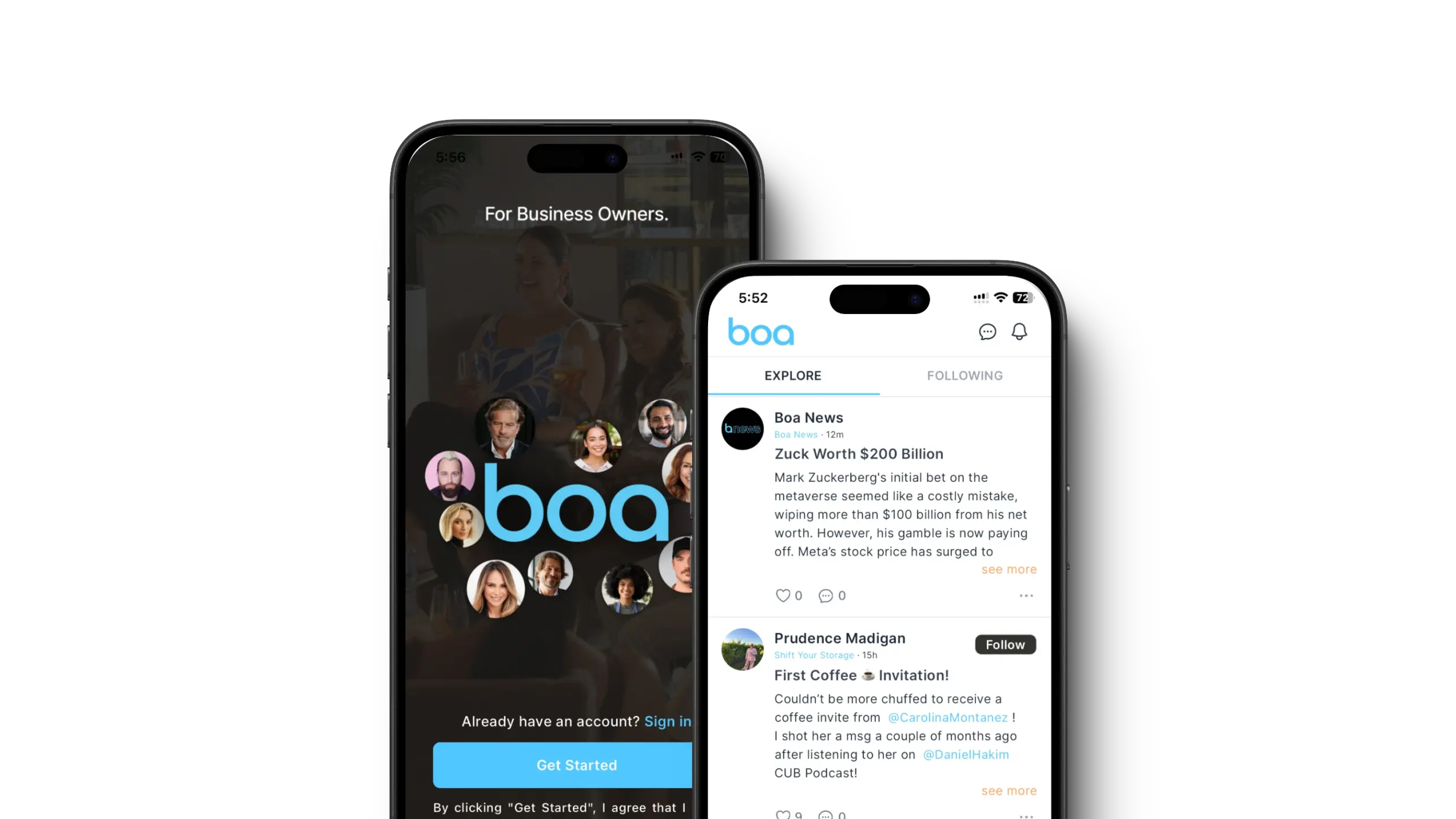
Connecting Business Owners in Australia
Case Study

Connecting Business Owners in Australia

The Challenge

How do you create a networking platform that truly resonates with business owners while offering efficient tools for connection and growth? Business owners in Australia were growing weary of platforms like LinkedIn, which lacked the focus and usability they desired. The challenge was to design a platform that facilitated meaningful communication, provided valuable business insights, and kept users engaged. BOA needed to include essential features like a well-organized forum, Q&A sections, business news, and the ability for users to chat, join communities, and participate in events—both free and paid. Additionally, ensuring the platform's UX/UI was intuitive and kept users actively engaged was a key factor in its development.

The Solution

We built a comprehensive networking platform tailored specifically for Australian business owners, combining social networking features with practical business tools. The platform enables members to seek advice, join communities, organize events, and stay updated with business news—all in one intuitive interface.

Impact • User Base
4,000+
Read Full Story
Industries We Serve

Industries We Serve with Node.js Development Company

We deliver node.js development company solutions across diverse industries, each with unique challenges and opportunities.

Manufacturing & Industrial Operations

Production data scattered across 5 systems? Equipment failures you can't predict? Spending 15+ hours weekly on manual reporting? We've built manufacturing systems for 50+ facilities. Our platforms connect legacy equipment to modern dashboards, predict maintenance needs weeks early, and automate productivity-killing reporting. Most clients see 40-60% efficiency gains within 12 weeks.

Learn more

Clubs & Member Communities

Spent $50k on membership software and still drowning in spreadsheets? Members lapsing because manual renewal reminders never sent? We've built custom membership management systems for 35+ clubs and communities. Our platforms eliminate administrative chaos, automate renewals, and prepare your organization for real growth. Most clients see 50-70% efficiency gains within 8-12 weeks. Production-ready in 10-14 weeks.

Learn more

Construction & Engineering

Project management software costing $150k but crews waste 70% of time on paperwork? Five systems causing 28% budget overruns? Spending 15+ hours weekly chasing RFIs? We've built construction platforms for 55+ contractors. Our systems unify estimating, scheduling, field coordination, and compliance. Most clients recover $200k-$500k annually and see ROI within 12-18 months. Production-ready in 10-16 weeks.

Learn more

Not-For-Profits & Charities

Donor data scattered across 5 systems? Payment reconciliation taking 15+ hours weekly? Program impact impossible to measure? We've built donor management systems for 10+ not-for-profits. Our platforms process millions of donation records, automate claim workflows, and connect CRMs to payment gateways. Most clients cut administrative overhead by 50-65% within 10 weeks and see ROI within 6 months.

Learn more

Healthcare & Pharmaceuticals

Transform your healthcare operations with custom software that unifies patient data, automates compliance workflows, and integrates seamlessly with Epic, Cerner, and other EHR systems. HIPAA-compliant solutions built for hospitals, clinics, laboratories, and pharmaceutical companies.

Learn more

Government & Public Sector

Critical systems down 10+ hours yearly? Staff drowning in paper-based workflows? Cybersecurity incidents every quarter? We've built secure, compliant systems for 40+ government agencies across state, local, and public safety operations. Our platforms eliminate manual processes, connect legacy systems, and meet FedRAMP and StateRAMP standards. Most agencies see 40-50% efficiency gains within 12-16 weeks.

Learn more

Real Estate & Property

Portfolio data stuck in spreadsheets? Missing critical lease renewal dates? Forecasting ROI with outdated information? We build custom real estate platforms that unify your data, automate property and lease management, and deliver predictive investment insights. Our systems for property managers, investors, and commercial firms cut admin by 30% and improve forecast accuracy by 40%.

Learn more

Science, Academia & Research

Research data scattered across incompatible systems? Spending 20+ hours weekly on manual data entry? Your team losing months reproducing experiments? We've built research platforms for 30+ academic institutions. Our systems integrate LIMS, ELNs, and AI-powered tools to automate workflows, ensure compliance, and accelerate discovery. Most teams see 40-60% efficiency gains within 12-16 weeks.

Learn more

Hospitality & Foodtech

Orders lost between POS and kitchen? Staff spending 20+ hours weekly on manual inventory? We've built food service systems for 45+ hospitality operations. Our platforms connect POS to production, automate ordering workflows, and cut manual work by 50-70%. Most clients see efficiency gains within 8 weeks and ROI within the first year.

Learn more

Financial Services & Wealth Management

Wealth management platforms costing $200k but advisors spend 15+ hours weekly on manual consolidation? Client portals that don't sync with your CRM? We've built fintech systems for 60+ wealth management firms. Our systems connect multiple custodians, CRM, and planning tools into unified workflows. Most advisors recover 15-25 hours weekly. SEC/FINRA-compliant in 12-20 weeks.

Learn more

Human Resources

Employee data scattered across 5 systems? HR teams spending 20+ hours weekly on manual paperwork? Compliance headaches keeping you up at night? We've built HR systems for 40+ organizations across recruitment, payroll, performance management, and compliance. Our custom HRIS platforms automate workflows, eliminate data silos, and reduce administrative burden by 40-60%. Most clients see measurable efficiency gains within 10-14 weeks.

Learn more

Legal Services & Law Firms

Manual billing consuming 15+ hours weekly? Case data scattered across 3 systems? Client intake taking 2+ hours per matter? We've built legal practice management software for 40+ law firms. Our platforms integrate case management with billing, automate document workflows, and reduce administrative burden by 60%+. Most firms see ROI within 8 months. Production-ready in 10-14 weeks.

Learn more

Node.js Development Company FAQs

Yes, Node.js is excellent for enterprise applications and is trusted by Fortune 500 companies including Netflix, PayPal, Uber, LinkedIn, and Walmart for mission-critical systems. Node.js's event-driven architecture enables building scalable microservices, high-performance APIs, real-time applications, and data streaming platforms that handle millions of requests. When combined with TypeScript for type safety, frameworks like NestJS for structured architecture, and proper testing practices, Node.js provides the robustness, scalability, and maintainability required for enterprise-scale applications. Studies show Node.js reduces infrastructure costs by 60% compared to traditional architectures while handling 10x higher concurrency.

Node.js development costs vary by location and developer experience. In the United States, Node.js developers typically charge $80-160 per hour, with senior developers in cities like San Francisco and New York commanding $130-220 per hour. In Australia, rates range from AUD $60-120 per hour (approximately USD $40-80). Project-based pricing depends on complexity: a minimum viable product (MVP) typically costs $25,000-60,000 and takes 2-3 months, mid-sized applications range from $60,000-180,000 over 3-6 months, and large-scale enterprise systems typically cost $180,000-600,000+ spanning 6-12 months. Factors affecting cost include application complexity, number of microservices, third-party integrations, real-time features, and ongoing maintenance needs.

Node.js application development timelines vary by project scope. A simple REST API or microservice takes 2-4 weeks, a startup MVP with core features typically requires 2-3 months, mid-complexity applications with real-time features and integrations need 3-6 months, and large-scale distributed systems usually take 6-12+ months. These timelines assume an experienced Node.js development team following agile methodologies. Node.js's JavaScript full-stack approach and extensive npm ecosystem can reduce development time by 50% compared to polyglot architectures. Factors affecting timeline include feature complexity, number of integrations, real-time requirements, team size, and whether you're building monolith or microservices architecture.

Node.js excels at building real-time applications (chat, collaboration tools, gaming), RESTful APIs and GraphQL servers, microservices architectures, data streaming and IoT platforms, serverless functions (AWS Lambda, Azure Functions), e-commerce backends with high concurrency, media streaming platforms, and any application requiring high throughput with many concurrent connections. Node.js's event-driven, non-blocking architecture handles I/O-bound operations exceptionally well. However, Node.js is less suitable for CPU-intensive operations (video encoding, complex calculations) where languages like Python or Go are better choices. For most modern web applications, APIs, and real-time systems, Node.js provides excellent performance and developer productivity.

Node.js is generally better for real-time applications, high-concurrency systems, and JavaScript full-stack development, while Python suits data science, machine learning, and CPU-intensive tasks. Node.js offers superior performance for I/O-bound operations (3-5x faster than Python), handles more concurrent connections efficiently, enables full-stack JavaScript development, and has faster API response times. Python provides better libraries for data science and ML, easier syntax for beginners, and better performance for CPU-bound operations. Node.js powers 85% of real-time web applications, while Python dominates data science (70% market share). Most businesses choose Node.js for APIs, microservices, and real-time features, while using Python for data processing and ML workflows.

Professional Node.js development companies provide comprehensive services including: custom Node.js backend development from concept to deployment, REST API and GraphQL server development, microservices architecture design and implementation, real-time application development (WebSockets, Socket.io), migration from legacy systems (PHP, Java, .NET) to Node.js, performance optimization for existing Node.js applications, architecture consulting and code reviews, third-party API integration and development, database design and optimization (MongoDB, PostgreSQL, Redis), DevOps setup including Docker, Kubernetes, CI/CD pipelines, cloud deployment and scaling (AWS, Azure, Google Cloud), serverless architecture development, ongoing maintenance and support, team augmentation, and technical training. Leading companies also offer specialized services like event-driven architecture design, stream processing implementation, and microservices orchestration.

Node.js offers several advantages: JavaScript full-stack development reducing context switching and team complexity, event-driven architecture handling 10,000+ concurrent connections per server (10x more than traditional architectures), largest package ecosystem with 2 million+ npm packages, fast development with 50% reduction in time-to-market, lower infrastructure costs (60% reduction) due to efficient resource usage, excellent real-time capabilities with WebSocket support, strong enterprise adoption by Netflix, PayPal, Uber, and Walmart, horizontal scalability with microservices and containerization, active community with 12M+ developers worldwide, and fast innovation with frequent updates. While Java offers more maturity and Python excels at data science, Node.js's combination of performance, developer productivity, and JavaScript ecosystem makes it ideal for modern web applications, APIs, and real-time systems.

Yes, Node.js excels at high-traffic applications and is used by companies like Netflix (1 billion+ hours streamed monthly), PayPal (1.5 billion+ transactions annually), and Uber (15M+ trips daily) for production systems. Node.js's event-driven, non-blocking architecture enables handling 10,000+ concurrent connections per server—10x more than traditional blocking architectures. When properly architected with horizontal scaling (Docker, Kubernetes), load balancing, caching (Redis), and database optimization, Node.js applications can handle millions of requests per day with sub-100ms response times. Key to high-traffic Node.js applications: clustering for multi-core CPU utilization, connection pooling for databases, CDN for static assets, message queues for async processing, and proper monitoring. Studies show Node.js reduces infrastructure costs by 60% while handling higher concurrency than traditional architectures.

When selecting a Node.js development company, evaluate these key factors: portfolio quality with verifiable Node.js projects similar to your needs, technical expertise including Express/NestJS/Fastify, TypeScript, microservices, Docker, and cloud platforms, client testimonials and case studies with measurable performance results, development process transparency including agile methodologies and communication practices, team experience with senior Node.js developers who have 3+ years of specific Node.js expertise, architecture capabilities for scalable systems design, post-launch support including maintenance packages and SLA guarantees, industry experience in your sector (FinTech, E-commerce, SaaS), code quality standards including testing coverage (80%+), documentation, and review processes, DevOps expertise for deployment and scaling, cultural fit and time zone compatibility, and pricing transparency with clear estimates. Request code samples, architectural diagrams, and references from previous clients with similar scale requirements.

Node.js is a JavaScript runtime environment that executes JavaScript code outside browsers, while Express is a web framework built on top of Node.js that simplifies building web applications and APIs. Node.js provides the core platform (event loop, V8 engine, core modules for file system, networking, etc.), while Express adds HTTP server functionality, routing, middleware system, request/response handling, and template engine integration. Think of Node.js as the foundation and Express as a tool that makes building web applications easier. You need Node.js to run Express, but you can use Node.js without Express (using native http module). Most developers use Express (or alternatives like Fastify, Koa, NestJS) on top of Node.js for building APIs and web applications because these frameworks provide essential features and better developer experience than using Node.js's native modules alone.

Yes, Node.js can be highly secure for production applications when following best practices. Major companies like PayPal, Netflix, and banks use Node.js for secure production systems. Security best practices include: using latest LTS (Long Term Support) Node.js versions with security patches, implementing Helmet.js for HTTP header security, validating and sanitizing all user inputs, using parameterized queries to prevent SQL injection, implementing rate limiting to prevent DDoS attacks, using JWT or session-based authentication properly, storing secrets in environment variables (never in code), implementing HTTPS/TLS encryption, using npm audit to detect vulnerable dependencies, following principle of least privilege for permissions, implementing comprehensive logging and monitoring, and conducting regular security audits. Node.js security is not about the platform itself but about implementation practices. Our Node.js applications include security reviews, penetration testing, and compliance validation (SOC 2, PCI DSS) as standard practice.

We maintain strict code quality standards on all Node.js projects through comprehensive testing (80%+ code coverage with Jest and Supertest), TypeScript for type safety and compile-time error detection, ESLint and Prettier for consistent code formatting and best practices, Husky pre-commit hooks preventing bad code from being committed, comprehensive code reviews by senior developers before merging, architectural decision records (ADRs) documenting key choices, SonarQube for code quality metrics and security vulnerability detection, performance profiling and optimization, load testing with Artillery or k6, Docker containerization for consistent environments, CI/CD pipelines running automated tests on every commit, monitoring and logging with Prometheus, Grafana, and ELK stack, API documentation with Swagger/OpenAPI, and comprehensive project documentation. Every project includes testing strategy, deployment procedures, monitoring dashboards, and runbooks for production operations.

Yes, we specialize in migrating legacy applications to Node.js with minimal disruption. Common migrations include PHP to Node.js, Java/Spring to Node.js, .NET to Node.js, Python to Node.js, and Ruby on Rails to Node.js. Our migration process includes comprehensive codebase audit and migration assessment, incremental migration strategy (strangler pattern) to minimize risk, API-first approach enabling parallel systems, feature parity testing ensuring nothing breaks, performance benchmarking showing improvements (typically 3-5x faster APIs), database migration and optimization, team training on Node.js ecosystem, and gradual rollout with rollback capabilities. Most migrations take 3-6 months depending on application size. Benefits include 50% faster development post-migration, 60% lower infrastructure costs, improved scalability and performance, easier hiring due to JavaScript popularity, and modern development practices. We ensure zero downtime during migration with blue-green deployment strategies.

We've built Node.js applications across diverse industries including FinTech (payment processing, banking APIs, trading platforms), E-commerce (online stores, marketplaces, order management), SaaS (B2B platforms, CRM systems, collaboration tools), Media & Entertainment (streaming platforms, content management, real-time chat), HealthTech (telemedicine platforms, patient portals, health data APIs), Logistics (fleet management, route optimization, tracking systems), IoT (device management, data ingestion, real-time monitoring), Gaming (multiplayer backends, real-time game servers), and Telecommunications (messaging platforms, call routing systems). Each industry has unique requirements—fintech needs security and compliance, e-commerce needs high availability, media needs streaming capabilities. Our team understands industry-specific challenges and delivers solutions that meet regulatory requirements, performance standards, and business goals specific to your sector.

Yes, all Node.js projects include comprehensive post-launch support. Our support packages include bug fixes and critical patches (responded to within 24 hours), security updates and dependency upgrades, Node.js version upgrades, performance monitoring and optimization (response time, error rates, resource usage), feature enhancements and improvements, infrastructure scaling as traffic grows (horizontal scaling, load balancing), 24/7 monitoring with alerting (PagerDuty, Opsgenie), monthly performance reports and analytics, database optimization and query tuning, technical support for your team, backup and disaster recovery, and incident response procedures. We offer flexible support tiers: Basic Support ($4K-6K/month) for bug fixes and security updates, Standard Support ($6K-12K/month) including performance monitoring and minor enhancements, and Premium Support ($12K-25K/month) with dedicated developer resources and SLA guarantees. Initial projects typically include 3-6 months free support, after which you can continue with monthly retainers or transition to in-house maintenance with our comprehensive documentation, runbooks, and training.

Ready to Build with Node.js Development Company?

Schedule a free consultation to discuss your development needs and see how Node.js Development Company can help you build scalable applications.