Python ML & AI Development Company

We build production-ready machine learning models, AI-powered applications, and intelligent data platforms using Python. Our expert team delivers ML solutions with TensorFlow, PyTorch, scikit-learn, and FastAPI—from recommendation engines and fraud detection systems to computer vision applications and natural language processing. We help businesses leverage AI to automate decisions, predict outcomes, personalize experiences, and extract insights from data—all powered by Python's unmatched ML ecosystem and our expertise in deploying models to production.

Our Services

What We Build with Python

From MVPs to enterprise systems, we deliver production-ready solutions that scale.

Production-Ready Machine Learning Models with TensorFlow & PyTorch

We build production-grade ML models using TensorFlow for deep learning and large-scale deployments, PyTorch for research flexibility and dynamic computation graphs, and scikit-learn for traditional ML algorithms. TensorFlow provides: distributed training across GPUs/TPUs, TensorFlow Serving for model deployment, TensorFlow Lite for mobile/edge deployment, and Keras high-level API for rapid prototyping. PyTorch offers: dynamic computation graphs ideal for research, seamless NumPy integration, TorchScript for production optimization, and strong research community. We implement: neural networks for complex pattern recognition, transfer learning leveraging pre-trained models (BERT, ResNet, GPT), model optimization (quantization, pruning), and distributed training for large datasets. Essential for: computer vision (image classification, object detection), natural language processing (sentiment analysis, chatbots), recommendation systems, fraud detection, and predictive analytics. We deploy models to production with FastAPI, monitor performance, implement A/B testing, and automate retraining pipelines ensuring models stay accurate as data evolves.

ML Model Deployment & Serving with FastAPI

We deploy ML models to production using FastAPI providing high-performance async inference APIs with automatic documentation and type safety. FastAPI enables: concurrent model inference requests handling thousands of predictions per second, automatic OpenAPI/Swagger documentation for model APIs, request/response validation with Pydantic ensuring data quality, async/await for non-blocking inference, and seamless integration with ML frameworks. We implement: model versioning enabling A/B testing and rollbacks, prediction caching with Redis reducing compute costs, batch inference for efficiency, model monitoring tracking prediction latency and accuracy, and health checks ensuring model availability. Essential for: serving real-time predictions (fraud detection, recommendations), batch processing pipelines, model APIs for integration, and microservices architecture. FastAPI's async capabilities enable serving multiple models concurrently without blocking, critical for applications requiring sub-100ms inference latency. We deploy to Kubernetes for auto-scaling, implement circuit breakers for fault tolerance, and monitor model drift ensuring predictions remain accurate.

Data Science & ML Pipeline Engineering with Pandas & NumPy

We build robust data pipelines for ML using Pandas for data manipulation and NumPy for numerical computing—the foundation of Python's ML ecosystem. Pandas provides: DataFrame operations for cleaning and transforming data, time-series analysis for temporal data, data merging and joining, missing data handling, and efficient I/O for CSV, JSON, Parquet formats. NumPy offers: multi-dimensional arrays for numerical data, vectorized operations eliminating loops (100x faster), linear algebra operations, random number generation for simulations, and memory-efficient data structures. We implement: ETL pipelines extracting data from databases/APIs, feature engineering creating ML-ready datasets, data validation ensuring quality before training, time-series preprocessing for forecasting models, and data versioning with DVC tracking dataset changes. Essential for: preparing training data for ML models, exploratory data analysis (EDA), feature engineering pipelines, data quality validation, and preprocessing workflows. We optimize pipelines using vectorized operations, parallel processing with Dask for large datasets, and caching strategies reducing computation time. These libraries are prerequisites for all ML work—TensorFlow, PyTorch, and scikit-learn build on NumPy arrays.

Computer Vision & Image Processing with OpenCV & TensorFlow

We build computer vision applications using OpenCV for image processing and TensorFlow/PyTorch for deep learning models. OpenCV provides: image manipulation (resize, crop, filter), object detection with Haar cascades, feature extraction (SIFT, ORB), video processing, and real-time camera integration. TensorFlow/PyTorch enable: convolutional neural networks (CNNs) for image classification, transfer learning with pre-trained models (ResNet, EfficientNet, YOLO), object detection and segmentation, image generation with GANs, and custom model training. We implement: medical image analysis (X-rays, MRIs), quality control in manufacturing, facial recognition systems, autonomous vehicle perception, and document processing (OCR, form extraction). Essential for: healthcare diagnostics, retail (product recognition, inventory), security systems, and industrial automation. We optimize models for edge deployment (TensorFlow Lite, ONNX), implement real-time inference pipelines, and use data augmentation improving model robustness. Computer vision models require significant GPU resources for training—we leverage cloud GPUs (AWS, GCP) and optimize inference for production deployment.

Natural Language Processing & LLM Integration

We build NLP applications and integrate large language models (LLMs) using Hugging Face Transformers, spaCy, NLTK, and OpenAI APIs. Hugging Face provides: pre-trained transformer models (BERT, GPT, T5), tokenization and text preprocessing, model fine-tuning for domain-specific tasks, and model hub with 100,000+ models. We implement: sentiment analysis for customer feedback, chatbots and conversational AI, text classification and named entity recognition, document summarization, translation systems, and LLM integration (GPT-4, Claude) via APIs. Essential for: customer service automation, content moderation, document processing, search and recommendation systems, and intelligent assistants. We fine-tune models on domain-specific data improving accuracy, implement prompt engineering for LLM applications, use RAG (Retrieval-Augmented Generation) combining LLMs with knowledge bases, and optimize inference costs with model quantization. NLP models require significant computational resources—we use cloud GPU instances for training and optimize inference with model compression and caching strategies.

MLOps & Model Lifecycle Management

We implement comprehensive MLOps pipelines ensuring ML models are production-ready, monitored, and continuously improved. MLOps practices include: model versioning with MLflow or DVC tracking experiments and model artifacts, automated model training pipelines triggered by new data, model validation ensuring accuracy before deployment, A/B testing comparing model versions, model monitoring tracking prediction accuracy and data drift, automated retraining when performance degrades, and CI/CD for ML ensuring reproducible deployments. We use: MLflow for experiment tracking and model registry, Kubeflow for Kubernetes-native ML workflows, Weights & Biases for experiment visualization, and custom monitoring dashboards tracking model metrics. Essential for: maintaining model accuracy as data evolves, detecting concept drift requiring retraining, ensuring model reliability in production, and enabling rapid iteration on ML features. We implement: automated data quality checks, model performance alerts, retraining triggers based on accuracy thresholds, and rollback procedures for problematic model versions. MLOps is critical for production ML—models degrade over time without proper monitoring and retraining.

Recommendation Systems & Personalization Engines

We build recommendation systems using collaborative filtering, content-based filtering, and deep learning approaches. Collaborative filtering analyzes user behavior patterns (matrix factorization, neural collaborative filtering), content-based filtering uses item features and user preferences, and hybrid approaches combine multiple signals. We implement: product recommendations for e-commerce increasing sales by 20-30%, content recommendations for media platforms improving engagement, personalized search ranking, and next-best-action systems. Technologies include: scikit-learn for traditional ML, TensorFlow/PyTorch for deep learning, Surprise library for collaborative filtering, and real-time serving with Redis caching. Essential for: e-commerce platforms, streaming services, social media feeds, and any application requiring personalization. We handle: cold start problem for new users/items, scalability to millions of users and items, real-time updates as user behavior changes, and A/B testing different recommendation algorithms. Recommendation systems require significant data—we implement data collection pipelines, feature engineering, and model training workflows ensuring recommendations stay relevant.

Fraud Detection & Anomaly Detection Systems

We build fraud detection and anomaly detection systems using supervised learning (classification) and unsupervised learning (clustering, isolation forests). Supervised approaches train on labeled fraud cases, unsupervised approaches identify unusual patterns without labels. We implement: transaction fraud detection for financial services preventing millions in losses, account takeover detection identifying suspicious login patterns, anomaly detection in IoT sensor data, and outlier detection in business metrics. Technologies include: scikit-learn for traditional ML (random forests, gradient boosting), TensorFlow/PyTorch for deep learning detecting complex patterns, XGBoost for high-performance classification, and real-time inference serving predictions within milliseconds. Essential for: fintech payment processing, e-commerce platforms, cybersecurity systems, and industrial monitoring. We handle: imbalanced datasets (fraud is rare), real-time prediction requirements, model interpretability for compliance, and continuous learning adapting to new fraud patterns. Fraud detection requires careful feature engineering, model calibration for false positive rates, and comprehensive monitoring ensuring models catch new attack vectors.


Industries We Serve

Industries We Serve with Python

We deliver python solutions across diverse industries, each with unique challenges and opportunities.

Manufacturing & Industrial Operations

Production data scattered across 5 systems? Equipment failures you can't predict? Spending 15+ hours weekly on manual reporting? We've built manufacturing systems for 50+ facilities. Our platforms connect legacy equipment to modern dashboards, predict maintenance needs weeks early, and automate productivity-killing reporting. Most clients see 40-60% efficiency gains within 12 weeks.

Learn more

Clubs & Member Communities

Spent $50k on membership software and still drowning in spreadsheets? Members lapsing because manual renewal reminders never sent? We've built custom membership management systems for 35+ clubs and communities. Our platforms eliminate administrative chaos, automate renewals, and prepare your organization for real growth. Most clients see 50-70% efficiency gains within 8-12 weeks. Production-ready in 10-14 weeks.

Learn more

Construction & Engineering

Project management software costing $150k but crews waste 70% of time on paperwork? Five systems causing 28% budget overruns? Spending 15+ hours weekly chasing RFIs? We've built construction platforms for 55+ contractors. Our systems unify estimating, scheduling, field coordination, and compliance. Most clients recover $200k-$500k annually and see ROI within 12-18 months. Production-ready in 10-16 weeks.

Learn more

Not-For-Profits & Charities

Donor data scattered across 5 systems? Payment reconciliation taking 15+ hours weekly? Program impact impossible to measure? We've built donor management systems for 10+ not-for-profits. Our platforms process millions of donation records, automate claim workflows, and connect CRMs to payment gateways. Most clients cut administrative overhead by 50-65% within 10 weeks and see ROI within 6 months.

Learn more

Healthcare & Pharmaceuticals

Transform your healthcare operations with custom software that unifies patient data, automates compliance workflows, and integrates seamlessly with Epic, Cerner, and other EHR systems. HIPAA-compliant solutions built for hospitals, clinics, laboratories, and pharmaceutical companies.

Learn more

Government & Public Sector

Critical systems down 10+ hours yearly? Staff drowning in paper-based workflows? Cybersecurity incidents every quarter? We've built secure, compliant systems for 40+ government agencies across state, local, and public safety operations. Our platforms eliminate manual processes, connect legacy systems, and meet FedRAMP and StateRAMP standards. Most agencies see 40-50% efficiency gains within 12-16 weeks.

Learn more

Real Estate & Property

Portfolio data stuck in spreadsheets? Missing critical lease renewal dates? Forecasting ROI with outdated information? We build custom real estate platforms that unify your data, automate property and lease management, and deliver predictive investment insights. Our systems for property managers, investors, and commercial firms cut admin by 30% and improve forecast accuracy by 40%.

Learn more

Science, Academia & Research

Research data scattered across incompatible systems? Spending 20+ hours weekly on manual data entry? Your team losing months reproducing experiments? We've built research platforms for 30+ academic institutions. Our systems integrate LIMS, ELNs, and AI-powered tools to automate workflows, ensure compliance, and accelerate discovery. Most teams see 40-60% efficiency gains within 12-16 weeks.

Learn more

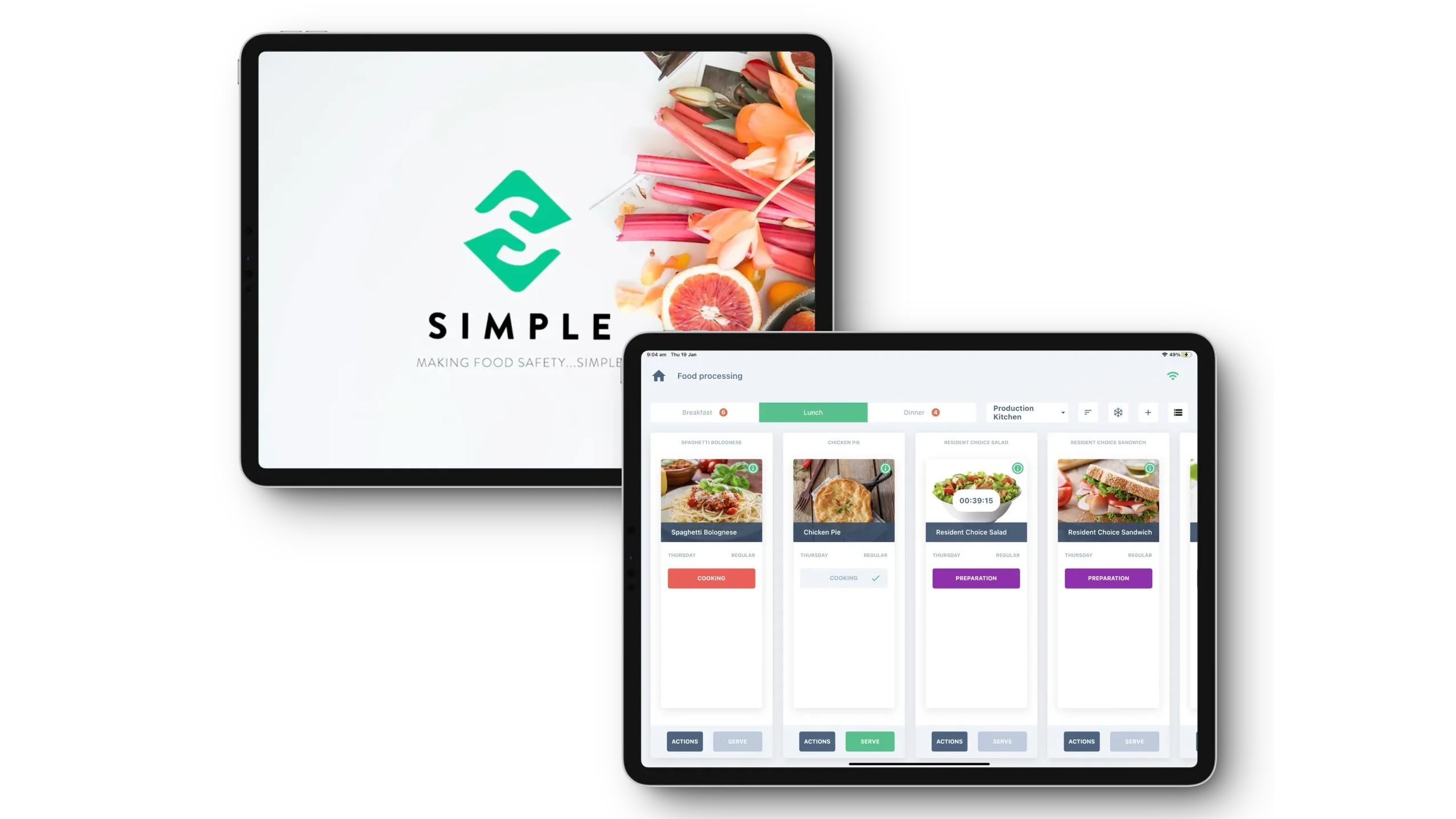
Hospitality & Foodtech

Orders lost between POS and kitchen? Staff spending 20+ hours weekly on manual inventory? We've built food service systems for 45+ hospitality operations. Our platforms connect POS to production, automate ordering workflows, and cut manual work by 50-70%. Most clients see efficiency gains within 8 weeks and ROI within the first year.

Learn more

Financial Services & Wealth Management

Wealth management platforms costing $200k but advisors spend 15+ hours weekly on manual consolidation? Client portals that don't sync with your CRM? We've built fintech systems for 60+ wealth management firms. Our systems connect multiple custodians, CRM, and planning tools into unified workflows. Most advisors recover 15-25 hours weekly. SEC/FINRA-compliant in 12-20 weeks.

Learn more

Human Resources

Employee data scattered across 5 systems? HR teams spending 20+ hours weekly on manual paperwork? Compliance headaches keeping you up at night? We've built HR systems for 40+ organizations across recruitment, payroll, performance management, and compliance. Our custom HRIS platforms automate workflows, eliminate data silos, and reduce administrative burden by 40-60%. Most clients see measurable efficiency gains within 10-14 weeks.

Learn more

Legal Services & Law Firms

Manual billing consuming 15+ hours weekly? Case data scattered across 3 systems? Client intake taking 2+ hours per matter? We've built legal practice management software for 40+ law firms. Our platforms integrate case management with billing, automate document workflows, and reduce administrative burden by 60%+. Most firms see ROI within 8 months. Production-ready in 10-14 weeks.

Learn more

Python FAQs

Choose based on project requirements. Django is best for: full-featured web applications needing admin panels, content management, rapid development, integrated authentication/ORM/forms, and enterprise applications requiring batteries-included approach. Django provides everything out of the box reducing development time by 40%. FastAPI excels at: high-performance async APIs (matching Node.js speed), microservices requiring minimal overhead, modern API development with automatic documentation, type-safe development with Pydantic, and data science model deployment. Flask suits: microservices with custom architectures, small to medium APIs, learning Python web development, and when you want full control over components. Most common pattern: Django for main web application with admin needs, FastAPI for high-performance microservices and data APIs, Flask for specific microservices requiring flexibility. We often combine frameworks—Django for business logic with FastAPI for high-throughput endpoints. All three frameworks are production-proven and scale to millions of users when properly architected.

Python development costs vary by complexity and developer experience. In the United States, Python developers charge $85-180 per hour, with senior developers in tech hubs commanding $150-250 per hour. In Australia, rates range from AUD $65-135 per hour (approximately USD $43-90). Project-based pricing includes: MVP REST API with Django or FastAPI ($25,000-65,000 over 6-10 weeks), mid-sized web application with Django ($65,000-180,000 over 3-6 months), complex enterprise backend with microservices ($180,000-500,000+ over 6-12 months), data platform with ML integration ($80,000-250,000 over 4-8 months), and ongoing maintenance ($3,500-15,000 per month). Factors affecting cost include application complexity, number of integrations, machine learning requirements, database design complexity, testing coverage requirements, and DevOps infrastructure setup. Python's productivity advantages often result in 30-40% lower total development costs compared to less expressive languages despite similar hourly rates.

Yes, Python handles high-performance backends when properly architected, though not for all use cases. FastAPI with async/await delivers performance matching Node.js for I/O-bound operations (database queries, API calls, file operations)—which represent 80%+ of typical web application workloads. Instagram serves 500+ million users with Django, Spotify uses Python for backend services, Netflix employs Python for data processing, and Dropbox runs on Python. Performance strategies include: async I/O with FastAPI/asyncio for concurrent operations, Celery offloading CPU-intensive tasks to background workers, Redis/Memcached caching reducing database load 60-80%, database query optimization with ORM best practices, horizontal scaling with Docker/Kubernetes, and C extensions (NumPy, Pandas) for numerical operations. Python's productivity advantage (40% faster development) often outweighs raw performance differences. For CPU-bound workloads (complex calculations, video processing), we use Python for orchestration with C/Rust extensions for performance-critical code. Choose Python for most web backends; consider Go/Rust for ultra-low-latency requirements (<10ms).

Python and Node.js both excel at backend development with different strengths. Python advantages include: cleaner, more readable syntax (easier maintenance), superior for data science/ML integration (TensorFlow, scikit-learn), stronger typing with type hints, Django's batteries-included framework (40% faster development for full-featured apps), better suited for CPU-intensive operations with multiprocessing, and larger talent pool with broader skill distribution. Node.js advantages include: JavaScript everywhere (same language frontend/backend), excellent for real-time applications (WebSockets, Socket.io), slightly better async performance for I/O-bound operations, npm ecosystem is largest package registry, and JSON-native processing. Performance: FastAPI matches Node.js async performance. Development speed: Django faster than Express.js for feature-rich apps, FastAPI comparable to Express. Ecosystem: Python stronger for data/ML, Node.js stronger for real-time. Choose Python for: data-intensive applications, ML integration, rapid development with Django, and team Python expertise. Choose Node.js for: real-time apps, frontend-backend code sharing, and teams with JavaScript expertise. Many companies use both—Python for data/ML services, Node.js for real-time features.

Yes, Python backends scale to hundreds of millions of users with proper architecture. Instagram serves 500+ million users with Django, YouTube uses Python for video processing, Spotify employs Python for backend services, Pinterest scaled to 400+ million users with Django, and Dropbox runs on Python serving millions. Scaling strategies include: horizontal scaling with stateless application servers behind load balancers, database replication and sharding distributing data load, caching with Redis/Memcached reducing database queries 60-80%, async operations with FastAPI/Celery preventing blocking, message queues (RabbitMQ, Kafka) for inter-service communication, microservices architecture enabling independent scaling, and cloud auto-scaling adjusting capacity automatically (AWS, GCP, Azure). Python's GIL (Global Interpreter Lock) limits multi-threading but doesn't affect production deployments using multiple processes (Gunicorn workers, separate containers). We implement: connection pooling, query optimization, strategic denormalization, CDN for static assets, and comprehensive monitoring. Properly architected Python backends handle 100,000+ requests per second. Scalability depends more on architecture than language choice—Python's productivity advantage enables rapid iteration optimizing architecture as needed.

Django admin is an automatically generated interface for managing database models providing instant CRUD (Create, Read, Update, Delete) operations without writing any code. When you define database models, Django admin automatically creates: browseable interface listing all records, forms for creating and editing records, search and filtering capabilities, bulk actions for multiple records, audit logs tracking changes, and permission system controlling access. Admin saves weeks of development by eliminating need to build: internal tools for operations teams, database management interfaces, user management screens, content moderation tools, and data entry forms. Highly customizable with: custom actions, inline editing of related models, list/detail view customization, filters and search configuration, and full theming. Essential for: SaaS applications needing tenant management, e-commerce platforms managing products/orders, content management systems, and any application requiring internal dashboards. Companies report admin saving 6-12 weeks of development on typical projects. Non-technical staff can manage data without developer involvement. Admin is production-ready securing with authentication/permissions out of the box. This productivity advantage is primary reason many companies choose Django over alternatives.

We integrate ML models seamlessly into Python backends leveraging unified ecosystem. Integration patterns include: training models with scikit-learn/TensorFlow/PyTorch, serializing with joblib/pickle, serving through FastAPI REST endpoints with automatic documentation, implementing prediction caching with Redis, handling async inference requests for responsiveness, and monitoring model performance with Prometheus/Grafana. For real-time predictions (fraud detection, recommendations), we load models at server startup and keep in memory. For batch predictions (report generation, data processing), we use Celery workers. Model versioning using MLflow or DVC enables A/B testing and rollbacks. Feature engineering pipelines built with Pandas ensure training/production consistency. FastAPI's async capabilities enable concurrent model inference without blocking. We implement: input validation with Pydantic, timeout handling for slow predictions, fallback strategies when models fail, and comprehensive logging for debugging. Python eliminates data science/engineering context switching—data scientists train models in Jupyter notebooks, engineers deploy same Python code to production. This integration is Python's unique advantage over other backend languages requiring separate ML serving infrastructure.

We implement comprehensive testing achieving 85%+ code coverage through: unit tests for business logic using pytest, integration tests for API endpoints with pytest-django or FastAPI TestClient, database fixture factories with Factory Boy generating test data, parametrized tests reducing test code duplication, mocking external services with pytest-mock preventing flaky tests, test coverage measurement with coverage.py, and CI/CD integration running tests on every commit. Django's test framework provides: test database isolation ensuring tests don't interfere, test client for API testing without server, and assertion helpers for common checks. We use: TDD (Test-Driven Development) for critical business logic, property-based testing with Hypothesis for edge case discovery, contract testing for API compatibility, load testing with Locust for performance validation, and security testing with Bandit for vulnerability detection. All tests run in parallel using pytest-xdist completing in under 5 minutes even with thousands of tests. Comprehensive testing enables: confident refactoring, rapid feature iteration, reduced production bugs by 80%, and living documentation of expected behavior. Essential for enterprise applications, regulated industries, and maintaining quality as teams scale.

We handle async operations using two approaches: async/await for I/O-bound concurrent operations and Celery for background task processing. FastAPI with async/await enables: concurrent database queries, parallel external API calls, WebSocket connections, and SSE (Server-Sent Events) without blocking—matching Node.js performance for I/O operations. Celery handles: time-consuming operations (report generation, file processing), scheduled periodic tasks (data sync, cleanup, notifications), distributed task execution across multiple workers, task retries with exponential backoff, and priority queues. Common patterns: FastAPI endpoints for responsive APIs, Celery for anything taking >500ms, scheduled tasks with Celery Beat (cron-like), task chains and workflows with Celery Canvas, and monitoring with Flower dashboard. Use cases: sending emails asynchronously, processing uploaded files, generating PDFs and exports, calling slow external APIs, batch processing, and ETL workflows. We implement: idempotent task design ensuring safe retries, dead letter queues for failed tasks, task timeouts preventing hung workers, and comprehensive logging for debugging. Architecture enables: instant API responses while work happens in background, horizontal scaling of workers independently from API servers, and fault tolerance with automatic task retry.

Yes, we specialize in migrating backends to Python with minimal disruption. Common migrations include: PHP to Django/FastAPI, Ruby on Rails to Django, Java to Python, legacy monoliths to Python microservices, and Node.js to Python (for data/ML advantages). Migration process includes: comprehensive codebase audit and strategy, data model mapping to Django ORM or SQLAlchemy, API compatibility layer maintaining existing contracts, incremental migration by module/service reducing risk, parallel running of old and new systems during transition, comprehensive testing ensuring feature parity, and gradual traffic shifting with rollback capabilities. Most migrations take 4-8 months depending on codebase size and complexity. Benefits include: 40% faster feature development post-migration, improved code maintainability with Python's readability, seamless ML integration for competitive advantage, larger Python talent pool reducing hiring costs, and modern development practices (type hints, testing, async). We ensure: zero data loss with thorough migration testing, no service interruption with blue-green deployments, complete feature parity validated by stakeholders, and team training on Python best practices. Many companies report improved developer satisfaction post-migration due to Python's productivity advantages.

We implement comprehensive security through framework features and additional hardening. Django security includes: CSRF protection enabled by default, SQL injection prevention via ORM parameterization, XSS protection with template auto-escaping, clickjacking protection, secure password hashing (PBKDF2/Argon2), session security, and security middleware. We add: JWT authentication with refresh token rotation, rate limiting with django-ratelimit or slowapi, input validation with Pydantic or Django forms, CORS configuration with django-cors-headers, security headers (CSP, HSTS, X-Frame-Options), secrets management with environment variables or AWS Secrets Manager, dependency scanning with Safety and Bandit, SQL injection testing even with ORM, and comprehensive audit logging. For regulated industries: implement encryption at rest and in transit, role-based access control (RBAC) with django-guardian, audit trails for compliance, data retention policies, and regular penetration testing. We follow OWASP Top 10 guidelines, conduct code security reviews, implement intrusion detection, configure WAF (Web Application Firewall), and maintain security patching within 24 hours of CVE disclosure. All deployments include: DDoS protection, SSL/TLS termination, database encryption, and network segmentation. Python's security is enterprise-grade and suitable for highly regulated industries (healthcare HIPAA, finance PCI DSS, government FedRAMP) when properly configured.

We maintain strict code quality through: comprehensive testing with pytest achieving 85%+ coverage, type hints on all functions enabling IDE autocomplete and mypy static analysis, PEP 8 compliance with Black formatter for consistent style, Pylint and Flake8 for code quality checks, pre-commit hooks preventing bad code from being committed, comprehensive code reviews by senior developers, extensive documentation with docstrings and Sphinx, and dependency management with Poetry or Pipenv ensuring reproducible environments. All code includes: clear function/class documentation, type annotations for function signatures, unit tests for business logic, integration tests for APIs, and examples for complex functionality. We implement: CI/CD pipelines running tests and linters on every commit, code coverage thresholds preventing coverage regression, security scanning with Bandit, dependency vulnerability checks with Safety, and performance profiling with py-spy. Project structure follows: clean architecture principles separating concerns, 12-factor app methodology, environment-specific configurations, and comprehensive README with setup instructions. This ensures: easy onboarding of new developers, confident refactoring with test safety net, long-term maintainability as requirements evolve, and code quality that scales with team growth.

We implement modern DevOps practices ensuring reliable deployments: Docker containerization with multi-stage builds for minimal image sizes, Kubernetes orchestration for auto-scaling and self-healing, CI/CD pipelines with GitHub Actions or GitLab CI running tests and deploying automatically, infrastructure as code with Terraform or CloudFormation, blue-green deployments enabling zero-downtime releases, and comprehensive monitoring with Prometheus/Grafana or Datadog. Deployment architecture includes: load balancers distributing traffic across instances, database connection pooling with PgBouncer, Redis for caching and sessions, Celery workers for background tasks, and CDN for static assets. We configure: health checks for automatic instance replacement, horizontal pod autoscaling based on CPU/memory, log aggregation with ELK stack or CloudWatch, error tracking with Sentry, and APM (Application Performance Monitoring) for bottleneck identification. Cloud deployment options: AWS (ECS, EKS, Lambda), Google Cloud (Cloud Run, GKE), Azure (Container Apps, AKS), or managed platforms (Heroku, PythonAnywhere). All deployments include: database migration automation, environment variable management, SSL/TLS certificates, backup verification, and rollback procedures. Typical deployment process: push code → automated tests → build Docker image → deploy to staging → run integration tests → deploy to production with gradual traffic shift → monitor metrics.

Python benefits industries requiring: rapid development, data processing, machine learning, or complex business logic. FinTech uses Python for: payment processing systems, fraud detection with ML, algorithmic trading, risk analysis, and financial modeling. HealthTech leverages Python for: patient management systems, EHR integrations, telemedicine platforms, medical image analysis with computer vision, and predictive healthcare analytics. E-commerce employs Python for: recommendation engines, inventory management, dynamic pricing, customer segmentation, and marketplace platforms. SaaS companies use Python for: rapid MVP development, multi-tenant platforms, usage analytics, and API services. Data platforms built with Python for: ETL pipelines, business intelligence, real-time analytics, and data science workflows. EdTech uses Python for: learning management systems, assessment platforms, adaptive learning algorithms, and student analytics. Each industry values Python for different reasons—fintech for ML fraud detection, healthcare for data interoperability, e-commerce for recommendation systems, SaaS for development velocity. Our team understands industry-specific challenges delivering compliant, secure, scalable solutions. Python's versatility makes it suitable for virtually any industry requiring backend development.

Yes, all Python projects include comprehensive ongoing support and maintenance. Support packages include: critical bug fixes with 4-hour response time, security patches applied within 24 hours of disclosure, dependency updates with compatibility testing, performance monitoring and optimization, database query tuning, feature enhancements and improvements, infrastructure scaling recommendations, 24/7 uptime monitoring with alerting, monthly performance and security reports, technical support for your team, and disaster recovery with automated backups. Support tiers: Basic ($3.5K-8K/month) covering monitoring, security updates, and bug fixes, Standard ($8K-18K/month) adding performance optimization and minor enhancements, and Premium ($18K-35K/month) with dedicated developers, SLA guarantees (99.95% uptime), and priority support. We maintain: test coverage during enhancements ensuring no regressions, documentation updates reflecting changes, code quality standards with reviews, and Django/FastAPI version upgrades with zero downtime. Initial projects include 3-6 months warranty support, after which monthly retainers provide ongoing maintenance. All support includes: monitoring dashboards, automated alerts, backup verification, security scanning, and performance profiling. For Django applications, we handle: admin customization as needs evolve, ORM optimization for new query patterns, and Celery task maintenance. For FastAPI services, we ensure: async performance optimization, API documentation accuracy, and Pydantic model updates.

Ready to Build with Python?

Schedule a free consultation to discuss your development needs and see how Python can help you build scalable applications.