
MongoDB Development Company

We design, build, and optimize MongoDB and NoSQL databases for applications requiring flexible schemas, horizontal scalability, and high-performance data access. Our expert team delivers production-ready document databases with sharding strategies, replica sets, aggregation pipelines, and comprehensive monitoring. From content management systems and IoT platforms to real-time analytics and user profile stores—we help businesses achieve 60% faster development with flexible schemas, handle billions of documents, and scale horizontally across multiple data centers.

Our Services

What We Build with MongoDB

From MVPs to enterprise systems, we deliver production-ready solutions that scale.

Flexible Document Schema for Rapid Development & Iteration

MongoDB's flexible document model reduces development time by 60% by eliminating rigid schema constraints and migration complexities. Store data as JSON-like documents (BSON) with nested objects and arrays matching your application's data structures naturally—no ORM impedance mismatch. Add new fields without database migrations, alter document structure per record (polymorphic data), and evolve schema as requirements change. Essential for: agile development with frequent requirement changes, applications with user-generated content varying by user, multi-tenant SaaS where each tenant needs custom fields, and rapid prototyping and MVPs. Unlike SQL databases requiring ALTER TABLE statements and application downtime, MongoDB schemas evolve with your codebase through application-level validation using JSON Schema or Mongoose schemas.

Horizontal Scalability with Automatic Sharding & Load Distribution

MongoDB scales horizontally across hundreds of servers handling petabytes of data and billions of documents through automatic sharding. Sharding distributes data across multiple servers (shards) based on shard key, enabling linear scalability—double servers, double capacity. MongoDB handles data distribution, query routing, and balancing automatically. Essential for applications experiencing rapid growth, handling massive datasets (IoT sensor data, logs, user events), or requiring geographic data distribution. We design optimal shard keys preventing hot spots, implement zone sharding for geographic data locality, configure chunk size for performance, and plan capacity for 5-10x growth. MongoDB Atlas provides automatic sharding with managed infrastructure. Unlike vertical scaling (limited by single server capacity), horizontal sharding provides unlimited growth potential.

High Availability with Replica Sets & Automatic Failover

We ensure 99.99% availability using MongoDB replica sets—groups of servers maintaining identical data copies with automatic failover within seconds. Replica sets provide: primary node for writes, secondary nodes for reads (load distribution), automatic election of new primary if current fails, and geographic distribution for disaster recovery. Read preference enables distributing queries across secondaries reducing primary load by 70%. Essential for: applications requiring 24/7 availability, disaster recovery across data centers, zero-downtime maintenance and upgrades, and regulatory compliance requiring data redundancy. We configure replica sets with 3+ nodes (odd number for election), delayed secondaries for point-in-time recovery protection, and monitoring for replication lag. MongoDB's built-in failover typically completes in 10-30 seconds with automatic client reconnection.

Powerful Aggregation Framework for Real-Time Analytics

MongoDB's aggregation pipeline processes data transformations and complex analytics within the database avoiding slow application-level processing. Aggregation stages include: $match (filtering), $group (grouping and calculating), $project (reshaping documents), $lookup (joining collections), $unwind (flattening arrays), and 30+ other operators. Process billions of documents efficiently with indexed pipeline stages, perform real-time analytics for dashboards, calculate metrics and KPIs, and generate reports. Essential for: business intelligence dashboards, real-time user behavior analytics, e-commerce product recommendations, and operational reporting. Aggregations run in parallel across sharded clusters processing data where it resides. We optimize pipelines placing $match early, using indexes, and minimizing data transferred between stages—achieving 10-100x performance improvements over application-level processing.

Case Studies

Real World Use Cases

How we apply our engineering standards to solve complex problems.

View all case studies

Select a Case Study

Streamline Casual Job Recruitment
Case Study

Streamline Casual Job Recruitment

The Challenge

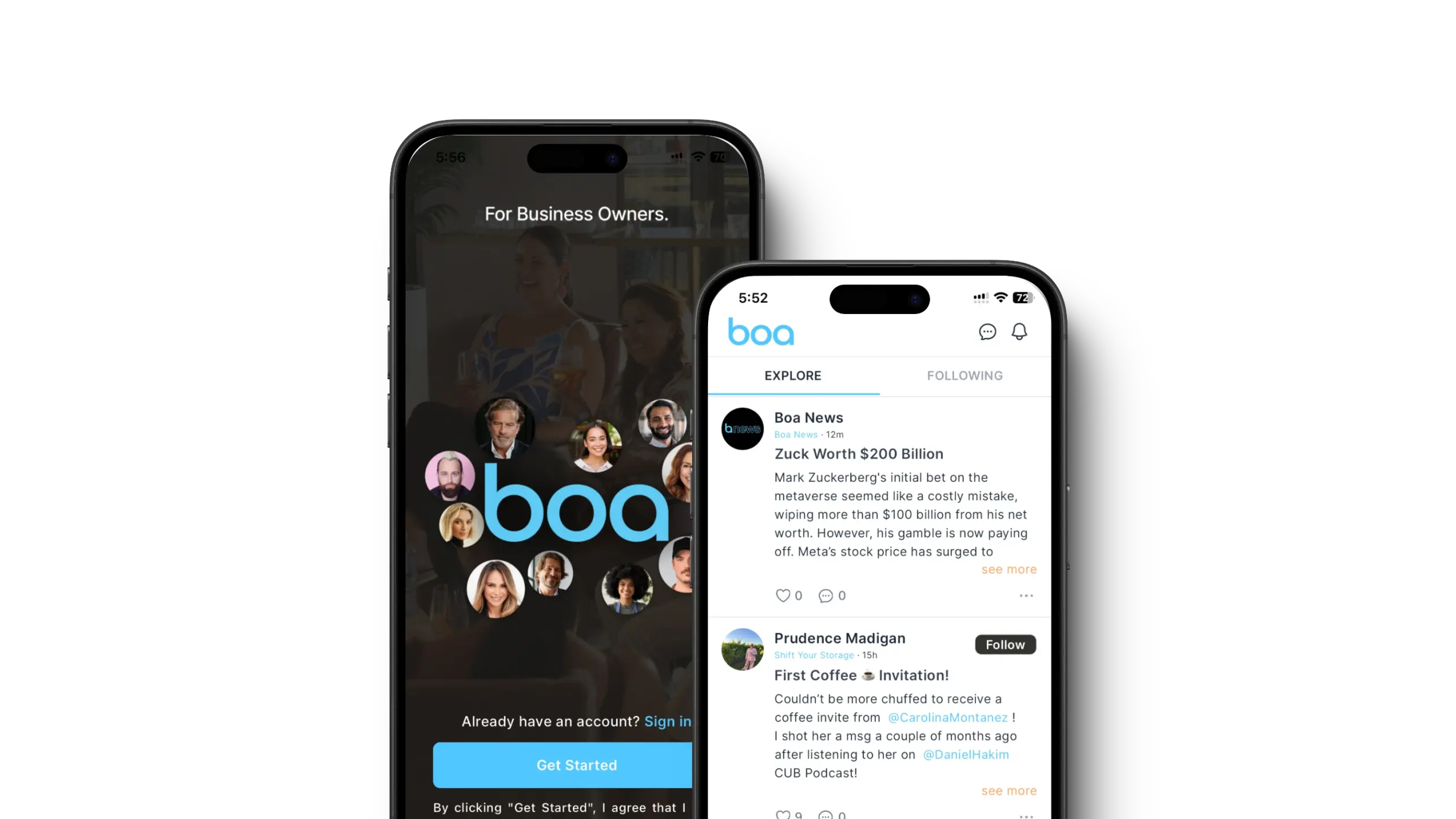
For many casual workers and businesses, recruitment still relied heavily on word of mouth, personal networks, and manual coordination. This made it hard for workers to find consistent shifts and for businesses to quickly fill roles, while payroll and timesheet processes added extra admin overhead. SVEN set out to simplify this landscape with a digital platform designed to streamline how casual roles are advertised, filled, and paid—without adding complexity for either side.

The Solution

We partnered with SVEN to design and build a two-sided platform: a mobile app for job seekers and a web-based interface for businesses. The solution makes it easy for workers to create profiles, browse and apply for casual roles, and track shifts, while businesses can post jobs, manage candidates, approve timesheets, and run payroll from a single place. By focusing on simple flows and clear interfaces, the platform reduces friction on both sides of the marketplace and turns a previously informal process into a structured, data-driven one.

Impact • User Growth
3,000+ users
Read Full Story
Industries We Serve

Industries We Serve with MongoDB

We deliver mongodb solutions across diverse industries, each with unique challenges and opportunities.

Manufacturing & Industrial Operations

Production data scattered across 5 systems? Equipment failures you can't predict? Spending 15+ hours weekly on manual reporting? We've built manufacturing systems for 50+ facilities. Our platforms connect legacy equipment to modern dashboards, predict maintenance needs weeks early, and automate productivity-killing reporting. Most clients see 40-60% efficiency gains within 12 weeks.

Learn more

Clubs & Member Communities

Spent $50k on membership software and still drowning in spreadsheets? Members lapsing because manual renewal reminders never sent? We've built custom membership management systems for 35+ clubs and communities. Our platforms eliminate administrative chaos, automate renewals, and prepare your organization for real growth. Most clients see 50-70% efficiency gains within 8-12 weeks. Production-ready in 10-14 weeks.

Learn more

Construction & Engineering

Project management software costing $150k but crews waste 70% of time on paperwork? Five systems causing 28% budget overruns? Spending 15+ hours weekly chasing RFIs? We've built construction platforms for 55+ contractors. Our systems unify estimating, scheduling, field coordination, and compliance. Most clients recover $200k-$500k annually and see ROI within 12-18 months. Production-ready in 10-16 weeks.

Learn more

Not-For-Profits & Charities

Donor data scattered across 5 systems? Payment reconciliation taking 15+ hours weekly? Program impact impossible to measure? We've built donor management systems for 10+ not-for-profits. Our platforms process millions of donation records, automate claim workflows, and connect CRMs to payment gateways. Most clients cut administrative overhead by 50-65% within 10 weeks and see ROI within 6 months.

Learn more

Healthcare & Pharmaceuticals

Transform your healthcare operations with custom software that unifies patient data, automates compliance workflows, and integrates seamlessly with Epic, Cerner, and other EHR systems. HIPAA-compliant solutions built for hospitals, clinics, laboratories, and pharmaceutical companies.

Learn more

Government & Public Sector

Critical systems down 10+ hours yearly? Staff drowning in paper-based workflows? Cybersecurity incidents every quarter? We've built secure, compliant systems for 40+ government agencies across state, local, and public safety operations. Our platforms eliminate manual processes, connect legacy systems, and meet FedRAMP and StateRAMP standards. Most agencies see 40-50% efficiency gains within 12-16 weeks.

Learn more

Real Estate & Property

Portfolio data stuck in spreadsheets? Missing critical lease renewal dates? Forecasting ROI with outdated information? We build custom real estate platforms that unify your data, automate property and lease management, and deliver predictive investment insights. Our systems for property managers, investors, and commercial firms cut admin by 30% and improve forecast accuracy by 40%.

Learn more

Science, Academia & Research

Research data scattered across incompatible systems? Spending 20+ hours weekly on manual data entry? Your team losing months reproducing experiments? We've built research platforms for 30+ academic institutions. Our systems integrate LIMS, ELNs, and AI-powered tools to automate workflows, ensure compliance, and accelerate discovery. Most teams see 40-60% efficiency gains within 12-16 weeks.

Learn more

Hospitality & Foodtech

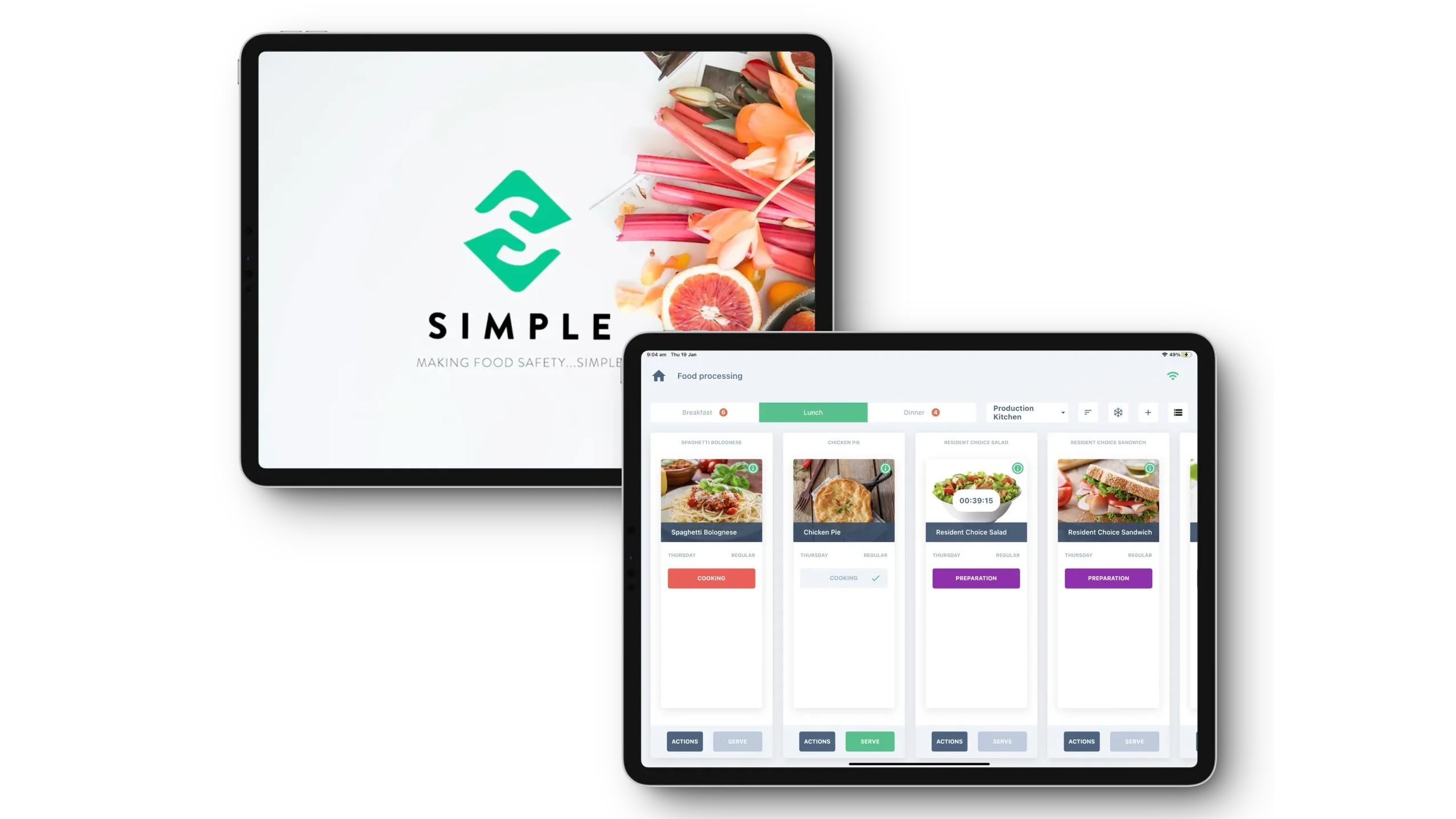
Orders lost between POS and kitchen? Staff spending 20+ hours weekly on manual inventory? We've built food service systems for 45+ hospitality operations. Our platforms connect POS to production, automate ordering workflows, and cut manual work by 50-70%. Most clients see efficiency gains within 8 weeks and ROI within the first year.

Learn more

Financial Services & Wealth Management

Wealth management platforms costing $200k but advisors spend 15+ hours weekly on manual consolidation? Client portals that don't sync with your CRM? We've built fintech systems for 60+ wealth management firms. Our systems connect multiple custodians, CRM, and planning tools into unified workflows. Most advisors recover 15-25 hours weekly. SEC/FINRA-compliant in 12-20 weeks.

Learn more

Human Resources

Employee data scattered across 5 systems? HR teams spending 20+ hours weekly on manual paperwork? Compliance headaches keeping you up at night? We've built HR systems for 40+ organizations across recruitment, payroll, performance management, and compliance. Our custom HRIS platforms automate workflows, eliminate data silos, and reduce administrative burden by 40-60%. Most clients see measurable efficiency gains within 10-14 weeks.

Learn more

Legal Services & Law Firms

Manual billing consuming 15+ hours weekly? Case data scattered across 3 systems? Client intake taking 2+ hours per matter? We've built legal practice management software for 40+ law firms. Our platforms integrate case management with billing, automate document workflows, and reduce administrative burden by 60%+. Most firms see ROI within 8 months. Production-ready in 10-14 weeks.

Learn more

MongoDB FAQs

Choose MongoDB when your application has: frequently changing requirements requiring schema flexibility (agile development), complex hierarchical or nested data structures (avoiding JOIN hell), massive scale requiring horizontal sharding, rapid development priorities where schema migrations slow velocity, diverse data types in same collection (polymorphic data), high write throughput for logging or analytics, or geographic distribution needs. Use SQL databases when: data relationships are complex with many-to-many associations, ACID transactions are critical across multiple entities, reporting requires complex JOINs, your team has stronger SQL expertise, or you're building traditional business applications with stable schemas. Many companies use both—MongoDB for flexible operational data (user profiles, content), SQL for structured transactional data (orders, payments). MongoDB 4.0+ supports ACID transactions, narrowing the gap with SQL databases for transaction-critical applications.

MongoDB development costs vary by complexity and deployment model. In the United States, MongoDB developers charge $80-170 per hour, with senior NoSQL architects commanding $150-250 per hour. In Australia, rates range from AUD $60-125 per hour. Project-based pricing includes: new MongoDB database design ($15,000-50,000 over 2-4 weeks), migration from SQL to MongoDB ($30,000-100,000 over 4-10 weeks), MongoDB Atlas setup and optimization ($10,000-35,000 over 1-3 weeks), sharding and performance optimization ($20,000-60,000 over 3-6 weeks), and ongoing database administration ($3,000-12,000 per month). MongoDB Atlas (fully managed cloud) costs $0.08-$10+ per hour depending on cluster size, while self-hosted reduces costs by 40-60% but requires DevOps expertise. Factors affecting cost include data volume, query complexity, sharding requirements, replication needs, and compliance requirements (HIPAA, SOC 2).

Yes, MongoDB 4.0+ supports multi-document ACID transactions providing atomicity, consistency, isolation, and durability across multiple operations, collections, and databases. Single-document operations in MongoDB have always been atomic. Multi-document transactions enable: financial applications requiring transaction guarantees (transfer money between accounts atomically), inventory management preventing overselling, workflow systems requiring multiple steps to succeed or fail together, and migrations from SQL databases requiring transaction semantics. However, MongoDB's design philosophy encourages embedding related data in single documents when possible—since single-document operations are atomic and more performant than multi-document transactions. We use transactions judiciously for use cases requiring multi-document consistency while designing schemas to minimize transaction needs. MongoDB transactions provide similar guarantees to SQL databases while maintaining NoSQL scalability and flexibility advantages.

MongoDB is a document database prioritizing flexibility and query power, while DynamoDB (key-value/document) prioritizes AWS integration and predictable performance, and Cassandra (wide-column) prioritizes write scalability and multi-datacenter replication. MongoDB offers: powerful query language with aggregations, flexible schema with nested documents, ACID transactions, change streams for real-time events, and works on any cloud or on-premises. DynamoDB provides: tight AWS integration, automatic scaling, predictable single-digit millisecond latency, but limited query capabilities and AWS lock-in. Cassandra excels at: massive write throughput, linear scalability, multi-datacenter active-active replication, but has limited query flexibility and no JOIN operations. Choose MongoDB for: applications needing flexible queries, rapid development, aggregations, and cloud portability. Choose DynamoDB for: AWS-native applications needing predictable performance. Choose Cassandra for: write-heavy workloads requiring multi-datacenter active-active replication. MongoDB is most popular with 33 million downloads compared to alternatives.

Yes, MongoDB scales horizontally to petabytes of data and billions of documents through automatic sharding. Leading companies use MongoDB at massive scale: eBay (2+ billion products), EA (300+ million players), Cisco (500+ terabytes), and The Weather Company (300TB+ of data). Sharding distributes data across multiple servers (shards) enabling linear scalability—double servers, double capacity. Scaling strategies include: choosing optimal shard key preventing hot spots, zone sharding for geographic data distribution, horizontal sharding for unlimited growth, read replicas distributing query load, and cloud auto-scaling adjusting capacity automatically. MongoDB Atlas provides automatic sharding, backup, and monitoring for managed scalability. We design shard keys based on query patterns, plan capacity for 5-10x growth, implement monitoring detecting bottlenecks early, and optimize indexes ensuring queries remain fast at scale. Proper architecture enables MongoDB to serve 100,000+ operations per second with sub-100ms latency even at billions of documents.

We execute SQL to MongoDB migrations systematically with minimal risk and zero data loss. Migration process includes: analyzing SQL schema and identifying relationships, designing MongoDB schema with embedded vs referenced documents, implementing data transformation pipeline, running parallel databases during transition, validating data integrity between systems, gradually shifting application queries to MongoDB, and decommissioning SQL database after validation. Key decisions include: when to embed related data (one-to-few, parent-child) vs reference (many-to-many), how to handle SQL JOINs (denormalization, aggregation $lookup), translating SQL transactions to MongoDB transaction or atomic documents, and mapping SQL indexes to MongoDB compound indexes. We use change data capture (CDC) tools keeping databases synchronized during migration. Most migrations take 6-12 weeks depending on database complexity. Benefits include: 50-70% faster development with flexible schemas, improved query performance without JOINs, horizontal scalability, and reduced infrastructure costs. We ensure comprehensive testing and rollback capabilities.

MongoDB provides comprehensive security including: authentication (SCRAM, x.509, LDAP, Kerberos), authorization with role-based access control (RBAC) at database/collection/field level, encryption at rest (AES-256) protecting stored data, encryption in transit (TLS/SSL) protecting network traffic, field-level encryption for sensitive data (credit cards, SSNs), auditing logging all database operations, and network isolation with IP whitelisting and VPCs. MongoDB Atlas (managed service) is certified for SOC 2 Type II, ISO 27001, HIPAA, PCI DSS, and GDPR compliance. We implement security best practices including: principle of least privilege for database users, disabling anonymous access, enabling authentication always, using short-lived credentials, implementing IP whitelisting, enabling comprehensive audit logging, and regular security updates. For healthcare, we implement HIPAA-compliant configurations with encryption and audit trails. For finance, PCI DSS compliance with field-level encryption. MongoDB's security is enterprise-grade and suitable for highly regulated industries when properly configured.

MongoDB provides comprehensive backup and disaster recovery through: continuous cloud backups with point-in-time recovery (PITR) enabling restoration to any second within retention window, snapshot-based backups capturing database state at intervals, oplog-based continuous backup capturing all operations, geographic backup distribution storing copies in multiple regions, automated backup testing verifying recoverability, and configurable retention policies (7-365 days). MongoDB Atlas provides automated backups with PITR included. For self-hosted deployments, we implement mongodump for logical backups, filesystem snapshots for physical backups, and continuous oplog archiving for PITR. Disaster recovery includes: replica sets with members in different availability zones providing automatic failover, geographic replica sets spanning regions for disaster protection, and regular disaster recovery drills ensuring procedures work. Recovery objectives include RTO (Recovery Time Objective) of under 15 minutes and RPO (Recovery Point Objective) of under 5 minutes for critical data. We implement monitoring ensuring backup success and alerting on failures.

MongoDB has a moderate learning curve—easier than SQL for developers new to databases, but requires mindset shift for experienced SQL developers. Developers familiar with JSON and JavaScript often become productive with MongoDB in 1-2 weeks. SQL developers transitioning to MongoDB need 3-4 weeks understanding: document model vs relational tables, when to embed vs reference data, schema design patterns avoiding JOIN operations, aggregation pipeline vs SQL queries, and optimistic locking vs SQL transactions. Key concepts include: documents replacing rows, collections replacing tables, embedded documents replacing JOINs (often), aggregation pipelines for complex queries, and indexes similar to SQL but with additional types. MongoDB University provides free online courses. The learning investment pays off with 50-60% faster development velocity once proficient. Most developers report MongoDB feels more natural than SQL for object-oriented applications since document structure matches application objects. MongoDB Compass GUI and Atlas interface reduce learning curve with visual tools.

MongoDB can serve caching and session storage use cases but Redis is typically better optimized for these specific workloads. Redis advantages include: in-memory storage providing sub-millisecond latency (MongoDB: 10-50ms from disk), atomic operations on data structures (strings, hashes, lists, sets), built-in TTL on keys for automatic expiration, and Pub/Sub for real-time messaging. However, MongoDB offers benefits for certain caching scenarios: persistent storage ensuring data survives restarts, complex queries and aggregations on cached data, larger cache sizes than available RAM, flexible document structures vs Redis simple key-value, and unified database platform reducing operational complexity. We often use both—Redis for hot data requiring sub-millisecond access (session tokens, frequently accessed objects, real-time counters) and MongoDB for: persistent sessions, complex cached objects, aggregated results cache, and warm cache tier. MongoDB Change Streams can invalidate Redis cache when source data changes. For applications not requiring sub-millisecond latency, MongoDB alone can handle session storage simplifying architecture.

We ensure optimal MongoDB performance through: comprehensive index strategy creating indexes for all query patterns, schema design optimizing for read/write patterns with appropriate embedding vs referencing, query optimization using explain plans and avoiding collection scans, aggregation pipeline optimization placing $match early and using indexes, connection pooling preventing connection exhaustion, appropriate read concerns and write concerns balancing performance and consistency, sharding strategy designing optimal shard keys, and comprehensive monitoring with MongoDB Atlas or Prometheus/Grafana. We establish performance baselines, implement query profiling identifying slow operations, tune MongoDB configuration for available hardware, implement caching strategies with Redis for hot data, and plan capacity ensuring databases scale before bottlenecks occur. Regular performance audits include: index utilization analysis, slow query identification, replication lag monitoring, disk I/O optimization, and memory usage tuning. All implementations include monitoring dashboards and alerting ensuring operations teams detect issues early.

MongoDB Atlas (fully managed cloud service) vs self-hosted comparison: Atlas provides automated backups with PITR, automated patching and upgrades with zero downtime, built-in monitoring and alerting, automatic scaling of compute and storage, global cluster distribution, security best practices pre-configured, and 24/7 support. Self-hosted offers 40-60% lower costs at scale, complete control over configuration, ability to run on-premises for compliance, custom hardware optimization, and no cloud vendor lock-in. Choose Atlas when: you want to focus on application development not database operations, need rapid deployment (Atlas deploys in 10 minutes), require global distribution, have limited DevOps expertise, or want guaranteed SLAs. Choose self-hosted when: you have strong DevOps team, need cost optimization at scale (100GB+ data), have on-premises requirements, require custom configurations, or want multi-cloud portability. Many companies start with Atlas for rapid development then evaluate cost-benefit of self-hosting as scale increases. We support both deployment models with expertise in Atlas setup, self-hosted optimization, and migration between them.

MongoDB handles relationships differently than SQL using two strategies: embedding related data in same document (denormalization) and referencing documents across collections (normalization). Embedding is preferred for: one-to-few relationships (user with 3 addresses), parent-child relationships (blog post with comments), and data that's read together. Benefits include single query to fetch all data, atomic updates across related data, and better performance avoiding JOINs. Referencing is necessary for: many-to-many relationships, one-to-many with unbounded 'many' side (blog post with 10,000 comments), and data that's frequently updated independently. MongoDB's $lookup aggregation operator performs SQL-like JOINs across collections when needed. However, schema design in MongoDB optimizes for application access patterns often eliminating JOIN needs through strategic denormalization. We design schemas based on: how data is queried (together or separately), update frequency (embedded data updated together), data size (avoid 16MB document limit), and atomicity requirements. Proper schema design reduces need for JOINs improving query performance significantly.

We provide comprehensive MongoDB support including: 24/7 proactive monitoring with alerting for performance issues, slow queries, or failures, automated backup verification ensuring recoverability, performance tuning as data volumes and patterns change, index optimization adding/removing indexes based on usage, capacity planning recommending scaling before bottlenecks, query optimization for newly identified slow operations, replica lag monitoring and resolution, MongoDB version upgrades with zero downtime, security patches within 24 hours of release, and monthly reports on database health and optimization opportunities. Support tiers include: Basic ($3K-7K/month) covering monitoring, backups, and critical issues, Standard ($7K-15K/month) adding performance optimization and proactive tuning, and Premium ($15K-30K/month) with dedicated database administrators, SLA guarantees (99.95% uptime), and priority support. All plans include emergency support with sub-30-minute response for critical issues. For MongoDB Atlas deployments, we provide optimization consulting complementing Atlas's built-in management. For self-hosted, we handle complete operational responsibility ensuring reliability and performance.

We help evaluate document storage options based on requirements. MongoDB excels at: true schema flexibility with heterogeneous documents, horizontal sharding for massive scale, powerful aggregation framework, change streams for real-time events, and purpose-built document database features. PostgreSQL with JSONB offers: combining relational and document data in same database, ACID transactions across JSON and relational tables, excellent JSON query performance with GIN indexes, mature ecosystem and operations knowledge, and avoiding separate database platform. Other document databases (CouchDB, RavenDB) serve niche use cases. Choose MongoDB when: application is primarily document-based, horizontal scaling is critical, schema changes frequently, using microservices (separate databases), or starting greenfield project. Choose PostgreSQL JSONB when: majority of data is relational with some flexible fields, want to avoid multiple database platforms, have strong PostgreSQL expertise, or need complex transactions across relational and document data. Many companies use both—PostgreSQL for core transactional data, MongoDB for flexible operational data. We provide architecture consulting analyzing access patterns, scalability requirements, team expertise, and cost optimization to recommend optimal solution.

Ready to Build with MongoDB?

Schedule a free consultation to discuss your development needs and see how MongoDB can help you build scalable applications.