
TypeScript Web Development Company

We build type-safe web applications, APIs, and enterprise systems using TypeScript. Our expert team delivers production-ready code with static type checking, intelligent autocomplete, and comprehensive error detection. From startup MVPs to enterprise applications handling millions of users, we help companies reduce bugs by 40%, improve code maintainability, and achieve measurable ROI with TypeScript's type safety and modern development experience.

Our Services

What We Build with TypeScript

From MVPs to enterprise systems, we deliver production-ready solutions that scale.

Static Type Checking for Compile-Time Error Detection

We catch errors before runtime using TypeScript's static type system that detects type mismatches, undefined properties, and incorrect function calls during development—not after deployment. This prevents bugs from reaching production, reduces debugging time, and improves code reliability. TypeScript's compiler catches errors like passing wrong argument types, accessing undefined properties, and incorrect API usage. Essential for applications requiring reliability, complex business logic, and long-term maintainability. Studies show TypeScript reduces bugs by 40% compared to JavaScript.

Enhanced IDE Support and Developer Experience

We improve developer productivity using TypeScript's intelligent tooling that provides autocomplete, refactoring support, and inline documentation. IDEs understand your code structure, suggest correct types, and provide instant feedback. This reduces development time, improves code quality, and enables faster feature development. TypeScript's type system serves as inline documentation, making code self-explanatory and easier to understand. Perfect for teams requiring faster development cycles, better code quality, and improved collaboration.

Interfaces and Type Definitions for Code Contracts

We define clear contracts using TypeScript's interfaces and type definitions that specify expected data structures, function signatures, and API contracts. Interfaces ensure consistency across codebases, enable better code organization, and provide compile-time guarantees. This approach reduces misunderstandings, improves code clarity, and enables safer refactoring. Perfect for applications requiring clear data structures, API contracts, and consistent code organization across large teams.

Gradual Adoption and JavaScript Compatibility

We enable gradual migration using TypeScript's JavaScript compatibility that allows adopting TypeScript incrementally without rewriting existing code. TypeScript is a superset of JavaScript, meaning all JavaScript code is valid TypeScript. This enables teams to migrate gradually, add types incrementally, and adopt TypeScript at their own pace. Perfect for teams wanting to improve code quality without disrupting existing workflows or requiring full rewrites.

Generics for Reusable, Type-Safe Components

We build reusable components using TypeScript's generics that enable creating flexible, type-safe code without sacrificing type safety. Generics allow functions and classes to work with multiple types while maintaining type checking. This enables code reuse, reduces duplication, and maintains type safety. Perfect for applications requiring reusable components, libraries, and flexible type-safe code.

Type Inference for Reduced Boilerplate

We write cleaner code using TypeScript's intelligent type inference that automatically determines types without explicit annotations. TypeScript infers types from context, reducing the need for verbose type annotations while maintaining type safety. This results in cleaner code, faster development, and maintained type safety. Perfect for teams wanting type safety without excessive type annotations and improved code readability.

Modern JavaScript Features with Type Safety

We use modern JavaScript features with type safety using TypeScript's support for ES6+ features including classes, arrow functions, async/await, destructuring, and more. TypeScript compiles modern JavaScript to compatible versions while adding type safety. This enables using latest JavaScript features, maintaining browser compatibility, and ensuring type safety. Perfect for applications requiring modern JavaScript features, browser compatibility, and type safety.

Industries We Serve

Industries We Serve with TypeScript

We deliver typescript solutions across diverse industries, each with unique challenges and opportunities.

Manufacturing & Industrial Operations

Production data scattered across 5 systems? Equipment failures you can't predict? Spending 15+ hours weekly on manual reporting? We've built manufacturing systems for 50+ facilities. Our platforms connect legacy equipment to modern dashboards, predict maintenance needs weeks early, and automate productivity-killing reporting. Most clients see 40-60% efficiency gains within 12 weeks.

Learn more

Clubs & Member Communities

Spent $50k on membership software and still drowning in spreadsheets? Members lapsing because manual renewal reminders never sent? We've built custom membership management systems for 35+ clubs and communities. Our platforms eliminate administrative chaos, automate renewals, and prepare your organization for real growth. Most clients see 50-70% efficiency gains within 8-12 weeks. Production-ready in 10-14 weeks.

Learn more

Construction & Engineering

Project management software costing $150k but crews waste 70% of time on paperwork? Five systems causing 28% budget overruns? Spending 15+ hours weekly chasing RFIs? We've built construction platforms for 55+ contractors. Our systems unify estimating, scheduling, field coordination, and compliance. Most clients recover $200k-$500k annually and see ROI within 12-18 months. Production-ready in 10-16 weeks.

Learn more

Not-For-Profits & Charities

Donor data scattered across 5 systems? Payment reconciliation taking 15+ hours weekly? Program impact impossible to measure? We've built donor management systems for 10+ not-for-profits. Our platforms process millions of donation records, automate claim workflows, and connect CRMs to payment gateways. Most clients cut administrative overhead by 50-65% within 10 weeks and see ROI within 6 months.

Learn more

Healthcare & Pharmaceuticals

Transform your healthcare operations with custom software that unifies patient data, automates compliance workflows, and integrates seamlessly with Epic, Cerner, and other EHR systems. HIPAA-compliant solutions built for hospitals, clinics, laboratories, and pharmaceutical companies.

Learn more

Government & Public Sector

Critical systems down 10+ hours yearly? Staff drowning in paper-based workflows? Cybersecurity incidents every quarter? We've built secure, compliant systems for 40+ government agencies across state, local, and public safety operations. Our platforms eliminate manual processes, connect legacy systems, and meet FedRAMP and StateRAMP standards. Most agencies see 40-50% efficiency gains within 12-16 weeks.

Learn more

Real Estate & Property

Portfolio data stuck in spreadsheets? Missing critical lease renewal dates? Forecasting ROI with outdated information? We build custom real estate platforms that unify your data, automate property and lease management, and deliver predictive investment insights. Our systems for property managers, investors, and commercial firms cut admin by 30% and improve forecast accuracy by 40%.

Learn more

Science, Academia & Research

Research data scattered across incompatible systems? Spending 20+ hours weekly on manual data entry? Your team losing months reproducing experiments? We've built research platforms for 30+ academic institutions. Our systems integrate LIMS, ELNs, and AI-powered tools to automate workflows, ensure compliance, and accelerate discovery. Most teams see 40-60% efficiency gains within 12-16 weeks.

Learn more

Hospitality & Foodtech

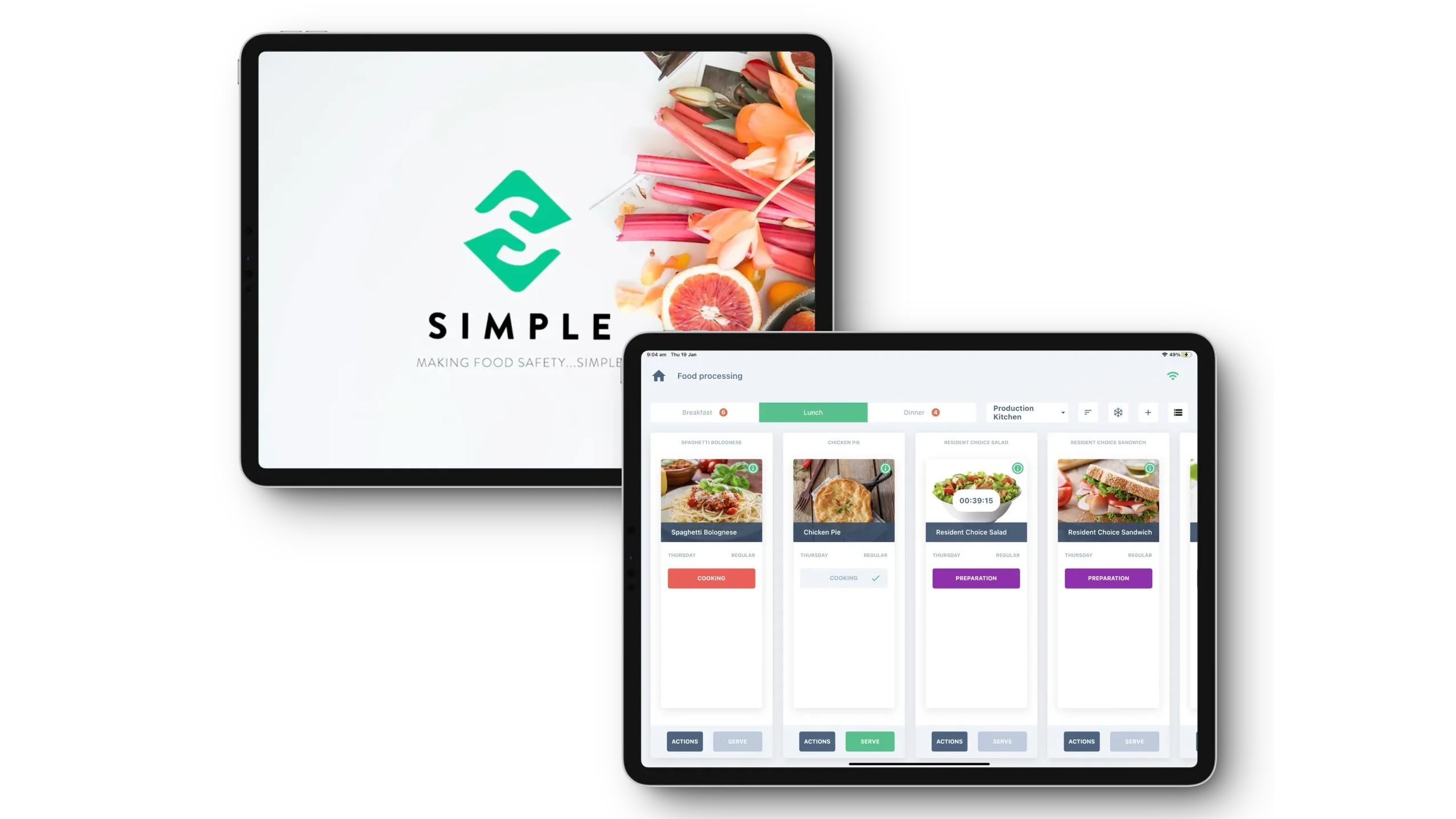
Orders lost between POS and kitchen? Staff spending 20+ hours weekly on manual inventory? We've built food service systems for 45+ hospitality operations. Our platforms connect POS to production, automate ordering workflows, and cut manual work by 50-70%. Most clients see efficiency gains within 8 weeks and ROI within the first year.

Learn more

Financial Services & Wealth Management

Wealth management platforms costing $200k but advisors spend 15+ hours weekly on manual consolidation? Client portals that don't sync with your CRM? We've built fintech systems for 60+ wealth management firms. Our systems connect multiple custodians, CRM, and planning tools into unified workflows. Most advisors recover 15-25 hours weekly. SEC/FINRA-compliant in 12-20 weeks.

Learn more

Human Resources

Employee data scattered across 5 systems? HR teams spending 20+ hours weekly on manual paperwork? Compliance headaches keeping you up at night? We've built HR systems for 40+ organizations across recruitment, payroll, performance management, and compliance. Our custom HRIS platforms automate workflows, eliminate data silos, and reduce administrative burden by 40-60%. Most clients see measurable efficiency gains within 10-14 weeks.

Learn more

Legal Services & Law Firms

Manual billing consuming 15+ hours weekly? Case data scattered across 3 systems? Client intake taking 2+ hours per matter? We've built legal practice management software for 40+ law firms. Our platforms integrate case management with billing, automate document workflows, and reduce administrative burden by 60%+. Most firms see ROI within 8 months. Production-ready in 10-14 weeks.

Learn more

TypeScript FAQs

Yes, TypeScript is excellent for enterprise applications and is used by Fortune 500 companies including Microsoft, Google, and Amazon for mission-critical systems. TypeScript's static type checking provides compile-time error detection, improved code maintainability, and enhanced developer productivity—making it ideal for large codebases and teams. When combined with comprehensive type definitions, interfaces, and proper tooling, TypeScript provides the reliability, scalability, and maintainability required for enterprise-scale applications. Studies show TypeScript reduces bugs by 40% compared to JavaScript while improving developer productivity and code quality.

TypeScript development costs vary by location and developer experience. In the United States, TypeScript developers typically charge $75-150 per hour, with senior developers in cities like San Francisco and New York commanding $125-200 per hour. In Australia, rates range from AUD $55-100 per hour (approximately USD $37-67). Project-based pricing depends on complexity: a minimum viable product (MVP) typically costs $20,000-50,000 and takes 2-3 months, mid-sized applications range from $50,000-150,000 over 3-6 months, and large-scale enterprise applications typically cost $150,000-500,000+ spanning 6-12 months. Factors affecting cost include application complexity, type system design, number of features, third-party integrations, and ongoing maintenance needs.

TypeScript application development timelines vary by project scope. A simple web application takes 2-4 weeks, a startup MVP with core features typically requires 2-3 months, mid-complexity applications with custom features and integrations need 3-6 months, and large-scale enterprise applications usually take 6-12+ months. These timelines assume an experienced TypeScript development team following agile methodologies. TypeScript's type system can reduce debugging time by 40%, potentially accelerating overall development. Factors affecting timeline include type system complexity, number of features, third-party integrations, team size, revision rounds, and whether you're migrating from JavaScript or building from scratch.

TypeScript is a typed superset of JavaScript that adds static type checking, while JavaScript is a dynamically typed language. TypeScript provides compile-time error detection, improved IDE support, better code documentation, and enhanced developer productivity, while JavaScript offers more flexibility, faster initial development, and no compilation step. TypeScript is better for large applications, team collaboration, and long-term maintainability, while JavaScript suits smaller projects and rapid prototyping. TypeScript compiles to JavaScript, meaning all TypeScript code becomes JavaScript, but TypeScript adds type safety and modern development features.

TypeScript is generally better for large applications, team collaboration, and long-term maintainability, while JavaScript suits smaller projects and rapid prototyping. TypeScript offers compile-time error detection, improved code quality, better IDE support, and enhanced team collaboration, while JavaScript provides more flexibility, faster initial development, and simpler setup. TypeScript is better for enterprise applications, complex codebases, and teams requiring code quality, while JavaScript suits simple projects, prototypes, and solo developers. Most enterprises choose TypeScript for reliability and maintainability, while startups sometimes prefer JavaScript for rapid development.

Professional TypeScript development companies provide comprehensive services including: custom TypeScript application development from concept to deployment, type system design and implementation, migration from JavaScript to TypeScript, API development with type-safe contracts, library development with comprehensive type definitions, frontend development with React, Vue, or Angular using TypeScript, backend development with Node.js and TypeScript, code quality improvement and refactoring, ongoing maintenance and support, team augmentation for temporary resource needs, and technical training for in-house teams. Leading companies also offer specialized services like type definition creation for third-party libraries, performance optimization, and enterprise architecture consulting.

TypeScript offers several advantages for enterprise applications: static type checking catching errors at compile-time, improved code maintainability with type definitions, enhanced developer productivity with IDE support, better team collaboration through clear code contracts, reduced bugs by 40% compared to JavaScript, safer refactoring with compile-time checks, improved code documentation through types, and long-term maintainability for large codebases. While JavaScript offers more flexibility and faster initial development, TypeScript's type safety and tooling make it ideal for enterprises requiring reliability, code quality, and team collaboration. Most enterprises choose TypeScript for mission-critical applications.

Yes, TypeScript excels at complex applications and large codebases through its type system that provides structure, error detection, and code organization. TypeScript's interfaces, generics, and type definitions enable managing complex data structures, API contracts, and component interactions. The type system helps navigate large codebases, understand code relationships, and safely refactor code. Perfect for applications requiring complex business logic, multiple modules, and long-term maintainability. TypeScript's tooling and type system scale well with codebase size, making it ideal for enterprise applications.

When selecting a TypeScript development company, evaluate these key factors: portfolio quality with verifiable TypeScript projects similar to your needs, technical expertise including type system design, advanced TypeScript features, and best practices, client testimonials and case studies with measurable results, development process transparency including agile methodologies and communication practices, team experience with senior TypeScript developers who have 3+ years of specific TypeScript expertise, post-launch support including maintenance packages and SLA guarantees, industry experience in your sector (FinTech, HealthTech, Enterprise SaaS), code quality standards including type coverage, documentation, and review processes, cultural fit and time zone compatibility for smooth collaboration, and pricing transparency with clear project estimates and no hidden costs. Request code samples, conduct technical interviews focusing on type system knowledge, and ask for references from previous clients in similar industries.

Yes, TypeScript is excellent for performance because it compiles to optimized JavaScript. TypeScript itself adds no runtime overhead—it's purely a development-time tool. The compiled JavaScript performs identically to hand-written JavaScript, and TypeScript's type checking happens at compile-time, not runtime. TypeScript can actually improve performance indirectly by catching errors early, reducing debugging time, and enabling better code optimization. For applications requiring optimal performance, TypeScript provides type safety without any runtime cost, making it ideal for performance-critical applications.

TypeScript interfaces define contracts for objects, specifying expected properties, types, and structures. Interfaces ensure consistency, provide compile-time guarantees, serve as documentation, and enable better IDE support. Benefits include type safety preventing incorrect property access, code clarity through explicit contracts, better IDE autocomplete and IntelliSense, safer refactoring with compile-time checks, and improved team collaboration through clear contracts. Companies use interfaces for API contracts, data structures, component props, and function signatures. For applications requiring clear data structures and API contracts, interfaces are essential for type safety and code quality.

We maintain strict code quality standards on all TypeScript projects through comprehensive type coverage (90%+ type coverage), strict TypeScript configuration enabling maximum type safety, ESLint and Prettier for consistent code formatting and best practices, Husky pre-commit hooks preventing bad code from being committed, comprehensive code reviews by senior developers before merging, type definition documentation including interfaces and types, continuous integration pipelines running type checks on every commit, SonarQube for code quality metrics and technical debt tracking, and detailed documentation including type definitions and architecture decisions. Every project includes type system strategy, type coverage goals, and quality gates that must pass before deployment.

Yes, we specialize in migrating JavaScript applications to TypeScript with minimal disruption to your business. Common migrations include plain JavaScript to TypeScript, React JavaScript to TypeScript, Vue JavaScript to TypeScript, Node.js JavaScript to TypeScript, and legacy codebases to modern TypeScript. Our migration process includes comprehensive codebase audit and migration planning, incremental migration strategy to minimize risk, type definition creation for existing code, feature parity testing ensuring nothing breaks, performance benchmarking showing no degradation, team training on TypeScript, and gradual rollout with rollback capabilities. Most migrations take 2-6 months depending on codebase size. Benefits include 40% reduction in bugs, improved code maintainability, better IDE support, safer refactoring, and enhanced developer productivity. We ensure zero functionality changes during migration.

We've built TypeScript applications across diverse industries including FinTech (banking platforms, trading systems, payment processing), HealthTech (patient portals, EHR integrations, medical software), Enterprise SaaS (B2B platforms, admin dashboards, workflow tools), E-commerce (online stores, marketplaces, B2C platforms), Government (citizen portals, case management, document systems), and Startups (MVPs, rapid prototyping, early-stage products). Each industry has unique requirements—fintech needs type safety for calculations, healthcare needs data integrity, enterprise needs maintainability. Our team understands industry-specific challenges and delivers solutions that meet type safety requirements, code quality standards, and business objectives specific to your sector.

Yes, all TypeScript projects include comprehensive post-launch support. Our support packages include bug fixes and critical patches (responded to within 24 hours), type definition updates and improvements, TypeScript version upgrades and migration support, performance monitoring and optimization, feature enhancements with type safety, code quality improvements and refactoring, 24/7 monitoring with alerting, monthly code quality reports and analytics, technical support for your team, and backup and disaster recovery. We offer flexible support tiers: Basic Support ($3K-5K/month) for bug fixes and type updates, Standard Support ($5K-10K/month) including code quality improvements and minor enhancements, and Premium Support ($10K-20K/month) with dedicated developer resources and SLA guarantees. Initial projects typically include 3-6 months free support, after which you can continue with monthly retainers or transition to in-house maintenance with our comprehensive documentation and training.

Ready to Build with TypeScript?

Schedule a free consultation to discuss your development needs and see how TypeScript can help you build scalable applications.