
Integration of Total Stations for Seamless Rail Geometry Monitoring
A modular web and IoT platform that automates multi-station rail geometry monitoring and reduces human error in critical infrastructure surveys.
What they needed
The client needed to replace an outdated Total Station monitoring setup with a modern system capable of running simultaneous multi-station surveys, automating rail geometry calculations, and reducing manual setup complexity. Existing processes were error-prone, difficult to scale, and not designed for continuous, automated monitoring at the level demanded by modern rail infrastructure projects.
What we delivered
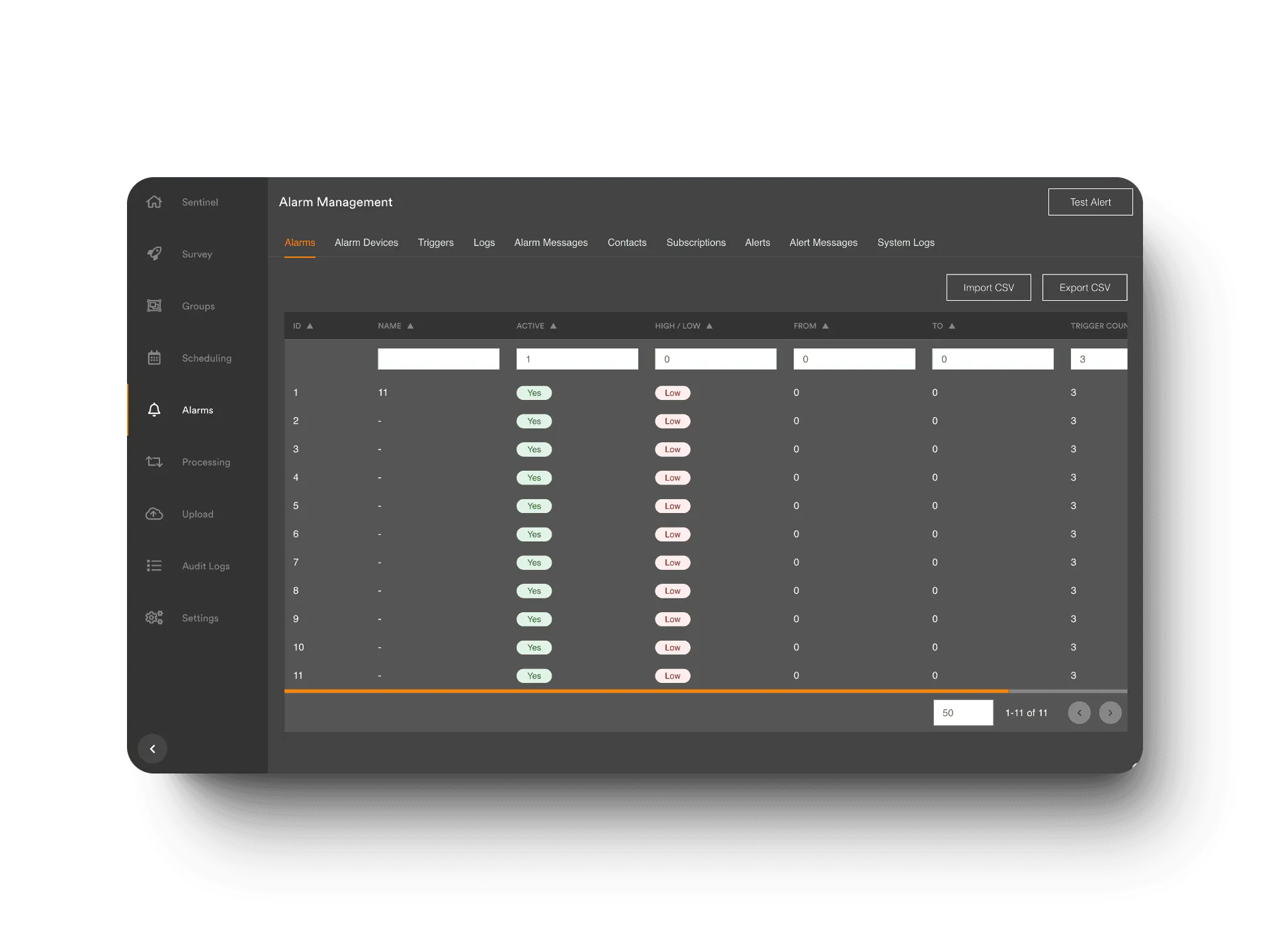
We designed and implemented Sentinel, an integrated platform that combines automated Total Station (ATS) monitoring with a modular web and processing architecture. The system enables multiple stations to run surveys in parallel, aggregates and processes overlapping data, and automatically calculates rail geometry across large sections of track. By embedding automation and clear alarm rules into the workflow, Sentinel delivers reliable, repeatable monitoring without the overhead of manual intervention on every survey.
Key Results
See Sentinel in Action
Discover how Sentinel automates multi-station rail geometry monitoring through modular components and automated processing.
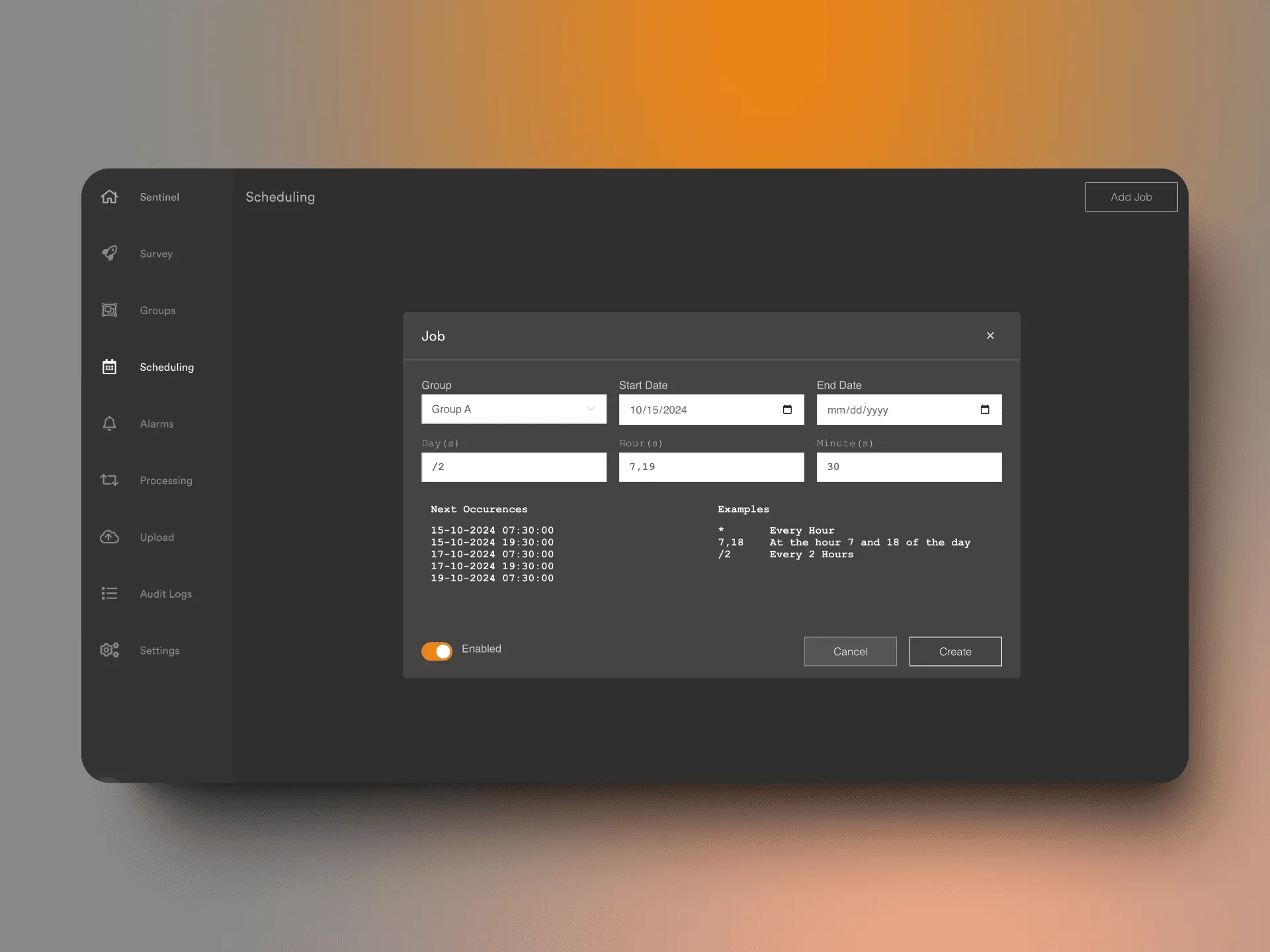
Multi-Station Survey Control
Operators configure and supervise multiple Total Stations from a central interface, with Sentinel orchestrating survey runs and aggregating data in real time.
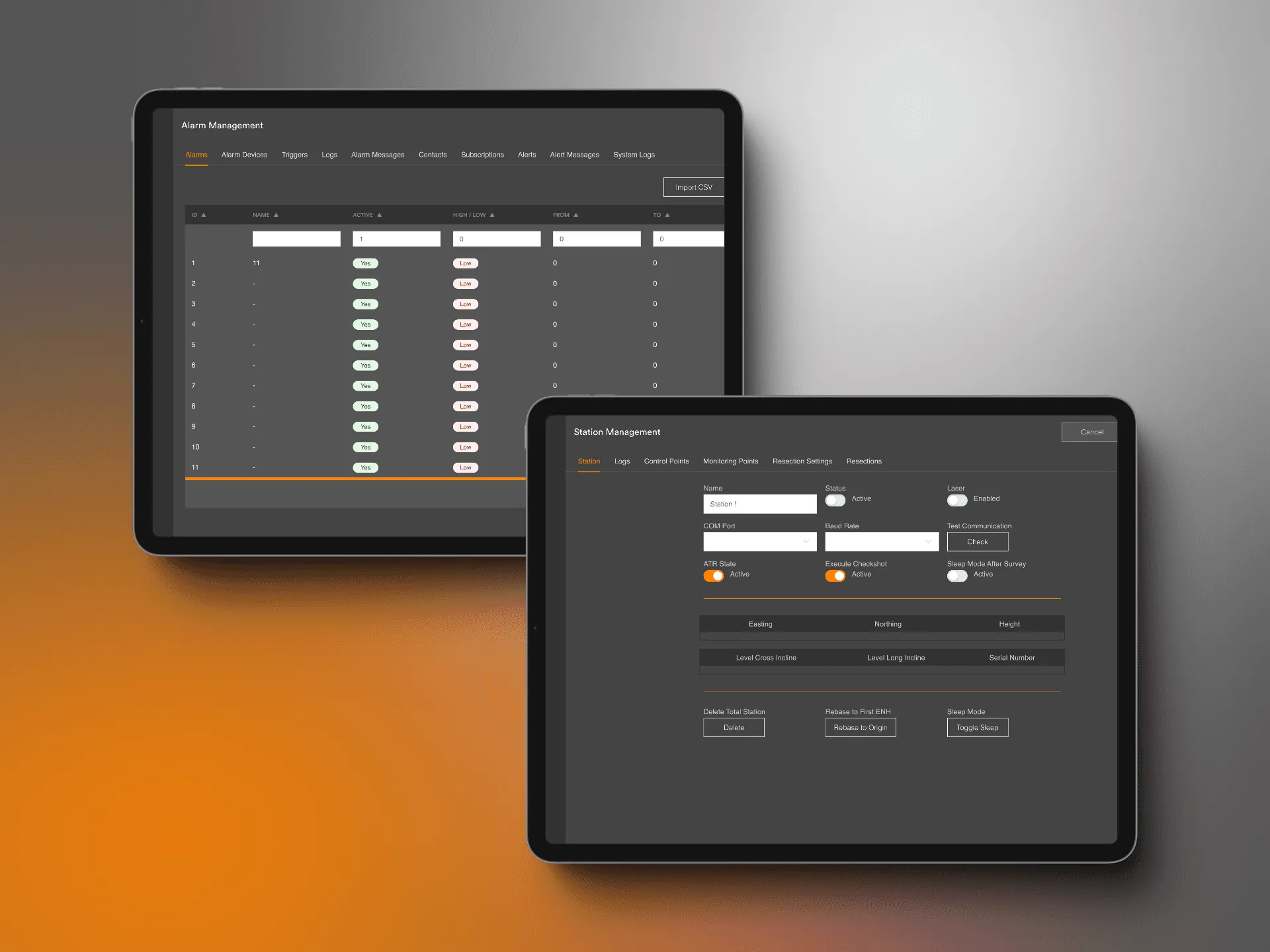
Rail Geometry Processing & Alarming
Processed survey data is translated into rail geometry metrics and compared against thresholds, with alarms raised automatically when limits are exceeded.
How we got there
Our approach centred on modularity, automation, and reuse of proven components. We separated the solution into dedicated modules for survey control, data processing, and alarm management, allowing each to run independently or as part of a larger pipeline. Setup flows were simplified so new projects and configurations could be created with minimal manual input, reducing the risk of errors. For calculations and alarms, we reused reliable code and patterns from the existing REMO system, accelerating delivery while maintaining confidence in critical logic. The result is a system that is easier to configure, more resilient, and ready to support future monitoring programs.
Explore More Case Studies
View All Case Studies
Ready to start your project?
Let's talk custom software and build something remarkable together.