

Hospitality & Foodtech Software Development
Orders lost between POS and kitchen? Staff spending 20+ hours weekly on manual inventory? We've built food service systems for 45+ hospitality operations. Our platforms connect POS to production, automate ordering workflows, and cut manual work by 50-70%. Most clients see efficiency gains within 8 weeks and ROI within the first year.
Common Industry Challenges
Organizations face unique challenges that impact operations, compliance, and efficiency.
Manual Order Management Across Multiple Channels
Description
Restaurant teams juggling phone orders, third-party delivery platforms, walk-ins, and online ordering across 4-6 different systems. Staff manually re-entering orders, missing tickets during rush periods, and struggling to track order status. One restaurant client was losing $12k monthly in missed orders and errors, spending 25+ hours weekly on manual order consolidation. The real cost? Order accuracy dropped to 82% during peak hours, driving negative reviews and lost repeat business.
Impact
Our Software Solutions
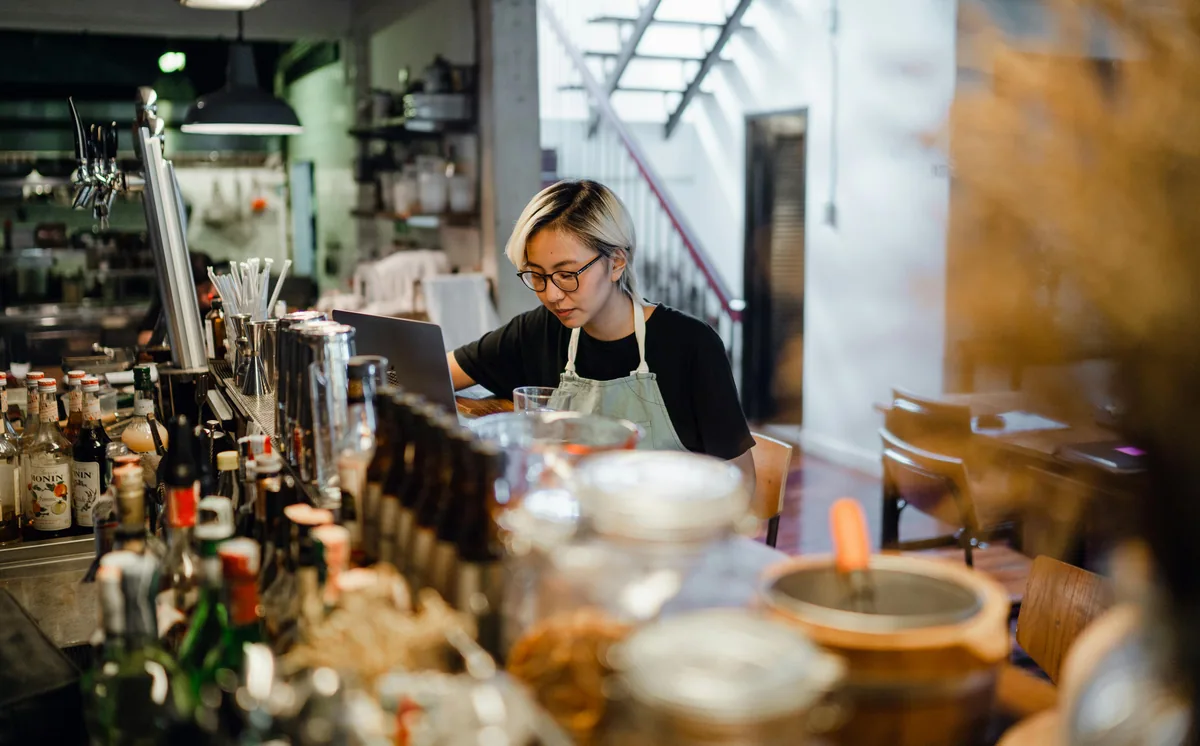
Unified Order Management Across All Channels
Real-Time Inventory and Waste Tracking Systems
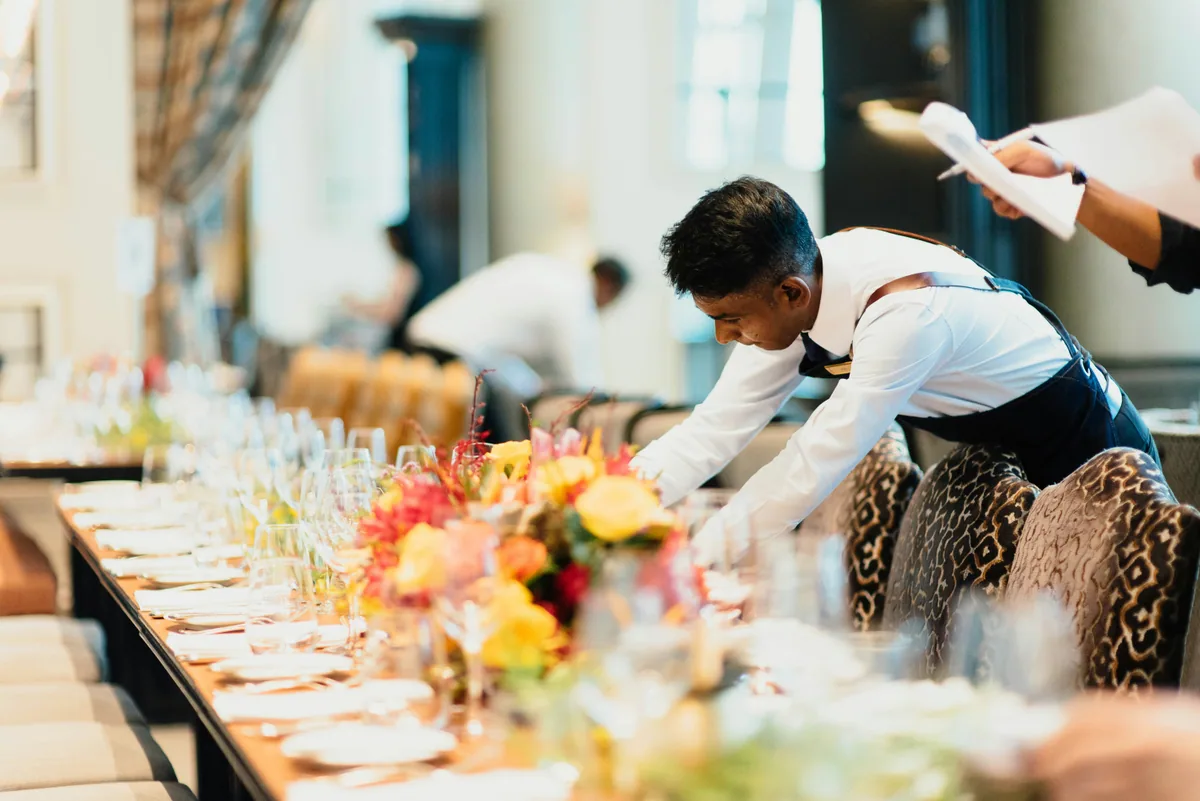
Intelligent Labor Scheduling and Cost Control
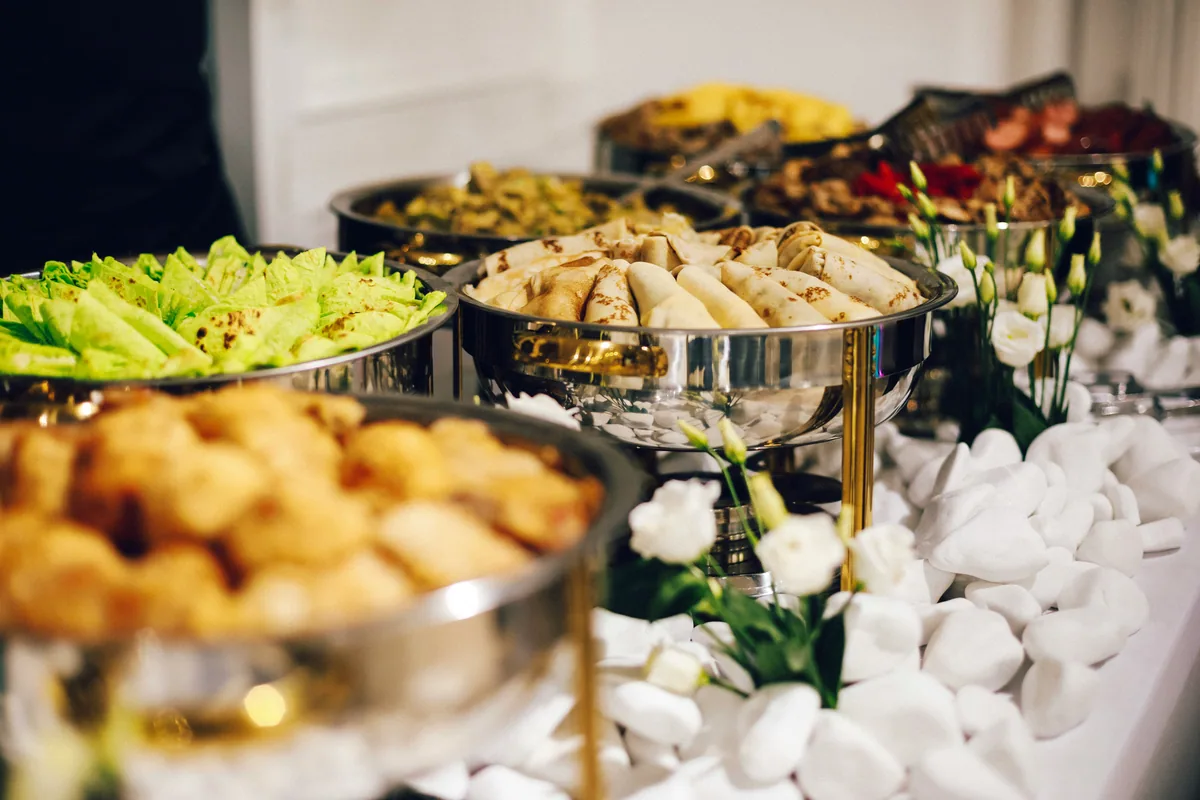
End-to-End Catering Management Platforms
Healthcare Food Service Production Systems
Types of Software We Develop
We specialize in complex, data-heavy industrial applications where off-the-shelf software falls short.
Restaurant Management Systems (RMS)
Description
Comprehensive platforms integrating POS, kitchen display, inventory management, labor scheduling, and financial reporting for restaurant operations. Modern RMS platforms connect front-of-house and back-of-house operations into unified systems eliminating manual data transfer. They provide real-time visibility into sales performance, labor costs, food costs, and operational efficiency. Best custom RMS solutions are built around your specific restaurant concept, menu complexity, and operational workflows rather than forcing you into rigid templates designed for generic restaurants.
Key Modules & Features

Real World Use Cases
How we apply our engineering standards to solve complex problems.
Technologies & Integrations
| System Type | Common Tools | Our Capabilities |
|---|---|---|
| POS Systems | Toast, Square, Clover, Oracle Micros, NCR Aloha, Lightspeed, Revel, Upserve, TouchBistro, SpotOn | Real-time sales data extraction and order synchronization, menu management and pricing sync across channels, payment processing and transaction reconciliation, table management and reservation integration, employee time clock and tip pooling integration, customer loyalty program data exchange |
| Third-Party Delivery Platforms | DoorDash, Uber Eats, Grubhub, Postmates, Deliveroo, Just Eat, Skip the Dishes, ChowNow, Ritual | Automated order import with menu and modifier synchronization, Real-time menu availability and pricing updates, Order status updates and delivery tracking, Commission and fee reconciliation, Customer feedback and rating management, Menu management across multiple platforms |
| Kitchen Display Systems (KDS) | Fresh KDS, QSR Automations, Oracle Kitchen Display, Square KDS, MarketMan KDS, Custom tablet-based solutions | Multi-station order routing and display management, Course timing and fire instructions for fine dining, Priority flagging and bump bar integration, Production time tracking and speed-of-service analytics, Video integration for expo oversight, Prep station and production area displays |
| Accounting and Financial Systems | QuickBooks, Xero, Sage Intacct, NetSuite, Restaurant365, BizAutomation, AccountEdge | Automated journal entry creation from operational data, Accounts payable integration with vendor invoicing, Payroll integration with time and attendance, Financial reporting with operational metrics, Budget vs. actual analysis with variance reporting, Multi-location consolidation with drill-down capabilities |
| Inventory and Purchasing Platforms | MarketMan, BlueCart, Restaurant365, BevSpot, Orderly, SimpleOrder, ChefMod, Crunchtime | Recipe management and ingredient costing, Automated purchase order generation and transmission, Receiving verification and invoice matching, Waste tracking and loss prevention, Vendor catalog integration and price comparison, Par level management and inventory forecasting |
Custom vs. Off-the-Shelf Software
Understanding the differences helps you make the right choice for your organization.
Details:
Direct integration with all delivery platforms, POS systems, and order channels consolidated into unified kitchen displays and management systems.Details:
Limited delivery platform integration, often requiring third-party middleware. Many channels require manual order entry or separate tablets.Details:
Built for multi-location from start with consolidated corporate visibility and location-level drill-down. No per-location pricing penalties.Details:
Enterprise pricing tiers charge premium fees for multi-location features. Consolidated reporting often requires expensive add-ons or manual exports.Details:
Recipe-based inventory with accurate deduction across all channels. Automated purchasing based on your specific vendors and ordering workflows.Details:
Generic inventory features don't match complex recipe specifications or multi-channel allocation. Limited vendor integration and purchasing automation.Details:
AI-powered labor forecasting based on your historical patterns, events, and weather. Real-time labor cost percentage during shifts for immediate adjustments.Details:
Basic scheduling features without predictive forecasting. Labor cost tracking often delayed or requires manual calculation against sales.Details:
$80k-$250k one-time development for enterprise system. Typical 5-year cost 40-60% less than commercial subscriptions with better operational fit.Details:
$200-$800 per location monthly ($2.4k-$9.6k annually) forever with escalating fees. Multi-location can exceed $50k annually. Total 5-year cost: $12k-$48k+ per location.Details:
End-to-end catering management from proposal through invoice built specifically for catering operations' unique workflows and requirements.Details:
Generic event features don't handle complex catering workflows. Proposal generation, production planning, and delivery management require separate tools.Why Hospitality & Foodtech Operators Choose StepInsight
Certifications & Expertise
- POS integration specialists (Toast, Square, Micros, NCR, Clover)
- Third-party delivery platform API experts
- Healthcare IT integration (FHIR, HL7 standards for EMR connectivity)
- Cloud infrastructure specialists (Google Cloud, Azure)
- Mobile application development (iOS, Android, Progressive Web Apps)
- Payment processing and PCI compliance
Industries Served
- Restaurant groups and multi-location operators
- Quick service and fast casual concepts
- Fine dining and upscale restaurants
- Catering and event management companies
- Hotel food service operations
- Hospital and aged care food service
- Ghost kitchens and virtual restaurant brands
- Food halls and multi-vendor operations
Services
- Custom restaurant management system development
- POS and delivery platform integration
- Multi-channel order aggregation and kitchen displays
- Real-time inventory and food cost management
- Catering and event management platforms
- Healthcare food service and EMR integration
- Labor forecasting and scheduling optimization
- Financial dashboards and operational analytics
Technology Stack
Stop Losing Money to Operational Chaos
Book a free 45-minute hospitality tech strategy call. We'll review your operations, identify efficiency gaps, and provide honest assessment whether custom development makes sense or commercial tools fit better. No sales pressure. Most calls identify $15k-$40k in immediate improvement opportunities.
Frequently Asked Questions
Hospitality and foodtech software development creates custom digital solutions tailored to your specific food service operations, workflows, and business model. Rather than forcing you into rigid templates designed for generic restaurants. While off-the-shelf restaurant software provides one-size-fits-all features requiring you to adapt operations to their constraints, custom development builds around your exact operational needs. Whether you're running multi-location restaurants, complex catering operations, hospital food service, or ghost kitchens with multiple brands. You'll get POS integration that works with your specific system, delivery platform consolidation that handles your exact channel mix, inventory management matching your menu complexity and vendor relationships, and financial reporting showing the metrics that matter for your decision-making. Custom platforms typically cost $80k-$250k one-time development versus $200-$800 per location monthly forever for commercial solutions. For operations with 3+ locations or complex workflows (catering, healthcare, multi-brand), custom development often costs 40-60% less over five years while delivering better operational fit and ROI within 10-16 months.
Custom hospitality software development typically costs $80k-$250k depending on operational complexity, number of locations, integration requirements, and feature scope. Single-location restaurant management systems with POS integration, inventory, and labor management run $80k-$120k. Multi-location platforms with consolidated reporting and corporate visibility cost $120k-$180k. Complex operations (catering with event management, healthcare food service with EMR integration, ghost kitchens with multi-brand management) range $180k-$250k+. Most hospitality operations achieve ROI in 10-16 months through combined labor savings (20-30 hours weekly recovered), reduced food waste (3-5% of revenue), optimized labor costs (4-8% margin improvement), and fewer order errors. Compare this to commercial restaurant software at $200-$800 per location monthly. A 5-location operator pays $12k-$48k annually, totaling $60k-$240k over five years while remaining constrained by platform limitations. Custom development costs more upfront but delivers better long-term value, especially for operations with unique workflows that off-the-shelf solutions can't address effectively.
We integrate with your existing POS system rather than requiring replacement. We've built integrations with Toast, Square, Clover, Oracle Micros, NCR Aloha, Lightspeed, Revel, TouchBistro, and dozens of other POS platforms. Integration approach depends on your POS capabilities. Modern cloud-based systems (Toast, Square, Clover) provide APIs for real-time data exchange enabling automatic inventory deduction, labor cost tracking, and financial reporting based on POS sales. Legacy systems (Micros, Aloha) require different integration methods but still work effectively. Our platforms extend your POS rather than replacing it. Adding capabilities the POS doesn't provide natively. Multi-channel order aggregation consolidating delivery platform orders into your POS. Recipe-based inventory management with automatic deduction. Real-time financial dashboards showing food cost and labor cost percentages. Advanced labor forecasting and scheduling. Your front-of-house staff continues using familiar POS hardware and workflows while back-of-house operations gain sophisticated management capabilities. Integration typically takes 8-12 weeks depending on POS complexity and desired features. We provide honest assessment upfront about what's possible with your specific POS system and any limitations requiring workarounds.
We build direct API integrations with delivery platforms (DoorDash, Uber Eats, Grubhub, Postmates, Skip the Dishes, etc.) that automatically import orders into unified kitchen display systems. Eliminating manual re-entry and separate tablets. Orders from all channels (delivery platforms, online ordering, phone orders, walk-ins) flow into intelligent kitchen displays with automatic routing by cooking station, order type, and priority. Menu synchronization ensures pricing and modifiers stay consistent across all platforms without manual updates. Order status updates automatically flow back to delivery platforms and customers showing preparation progress and estimated completion times. Consolidated reporting shows channel performance including order volume, average ticket size, commission costs, and actual profitability after fees. Most restaurant operations using our multi-channel platforms see order accuracy improve from 75-85% to 95%+ while eliminating 15-25 hours weekly spent on manual order management. Integration handles your specific delivery platform mix and can easily add new platforms as you expand channels. Kitchen capacity management can automatically throttle platform availability when kitchen approaches capacity limits, preventing over-promising during peak periods.
Effective inventory management platforms connect POS sales data with recipe specifications, purchasing, and receiving into systems that track every ingredient in real-time. Recipe-based automatic deduction reduces inventory as menu items sell, eliminating manual counting except for verification. When you sell a burger, the system automatically deducts buns, patties, cheese, lettuce, tomatoes, and condiments based on exact recipe quantities. Real-time food cost percentage updates continuously against sales targets, alerting managers to variance before problems compound. Automated purchase order generation triggers when inventory reaches par levels based on usage patterns and vendor lead times. Expiration date tracking flags ingredients approaching shelf life with FIFO rotation reminders for kitchen teams. Waste tracking captures disposal reasons (spoilage, prep errors, over-production) with pattern analysis identifying improvement opportunities. Vendor integration enables electronic ordering with automatic price updates for accurate recipe costing. Menu engineering tools show item profitability combining ingredient costs with sales volume. Most operations reduce food waste 3-5% of revenue (worth $30k-$75k annually for $1M revenue restaurant) while cutting inventory management time from 15-20 hours weekly to under 2 hours. Food cost percentages typically improve 3-6 points through better visibility and control.
AI-powered labor forecasting analyzes historical sales patterns, day-of-week trends, seasonality, weather forecasts, local events, reservations, and catering bookings to predict staffing needs with 90-95% accuracy. Much better than manager intuition or simple historical averaging. Predictive models identify patterns like rainy weather increasing delivery orders 30% or local sports games driving 40% higher bar volume. Automated schedule generation creates optimized schedules matching predicted demand while respecting staff availability, skill requirements, and labor law compliance (breaks, overtime limits, minor restrictions). Real-time labor cost tracking shows actual percentage against sales throughout each shift, enabling managers to make adjustments (early cuts or calling in additional staff) based on current performance rather than discovering problems days later. Mobile shift management allows staff to request swaps with manager approval, reducing scheduling disruption from callouts. Most restaurant operations reduce labor costs 4-8% of revenue (worth $40k-$80k annually for $1M revenue) while improving schedule accuracy and reducing manager scheduling time from 8-12 hours weekly to under 90 minutes. Service quality improves because you're neither understaffed (killing service) nor overstaffed (killing margins).
Yes, we specialize in end-to-end catering management platforms handling the entire workflow from initial inquiry through final invoice. Custom catering software manages proposal generation with automated menu, pricing, staff requirements, and equipment calculations based on event parameters. Client portals enable online proposal review and approval with digital signatures and deposits. Confirmed events automatically create detailed kitchen production schedules including prep lists, cooking instructions, dietary restrictions clearly flagged, allergen alerts, and packing requirements. Staff scheduling integrates event needs with availability, calculating accurate labor costs for profitability analysis. Equipment tracking ensures everything needed (chafers, tables, linens, serving pieces) is assigned, loaded, and returned. Delivery routing optimizes driver assignments and vehicle loading for multi-event days. Real-time event tracking shows setup status, food readiness, delivery confirmation, and issue alerts. Post-event invoicing happens automatically with all costs (food, labor, equipment, travel, rentals) captured during execution. Integration with CRM systems manages client relationships and event history. Most catering operations save 25-30 hours weekly on coordination while eliminating critical detail failures (dietary requirements, equipment, timing) that damage reputation and cause service failures.
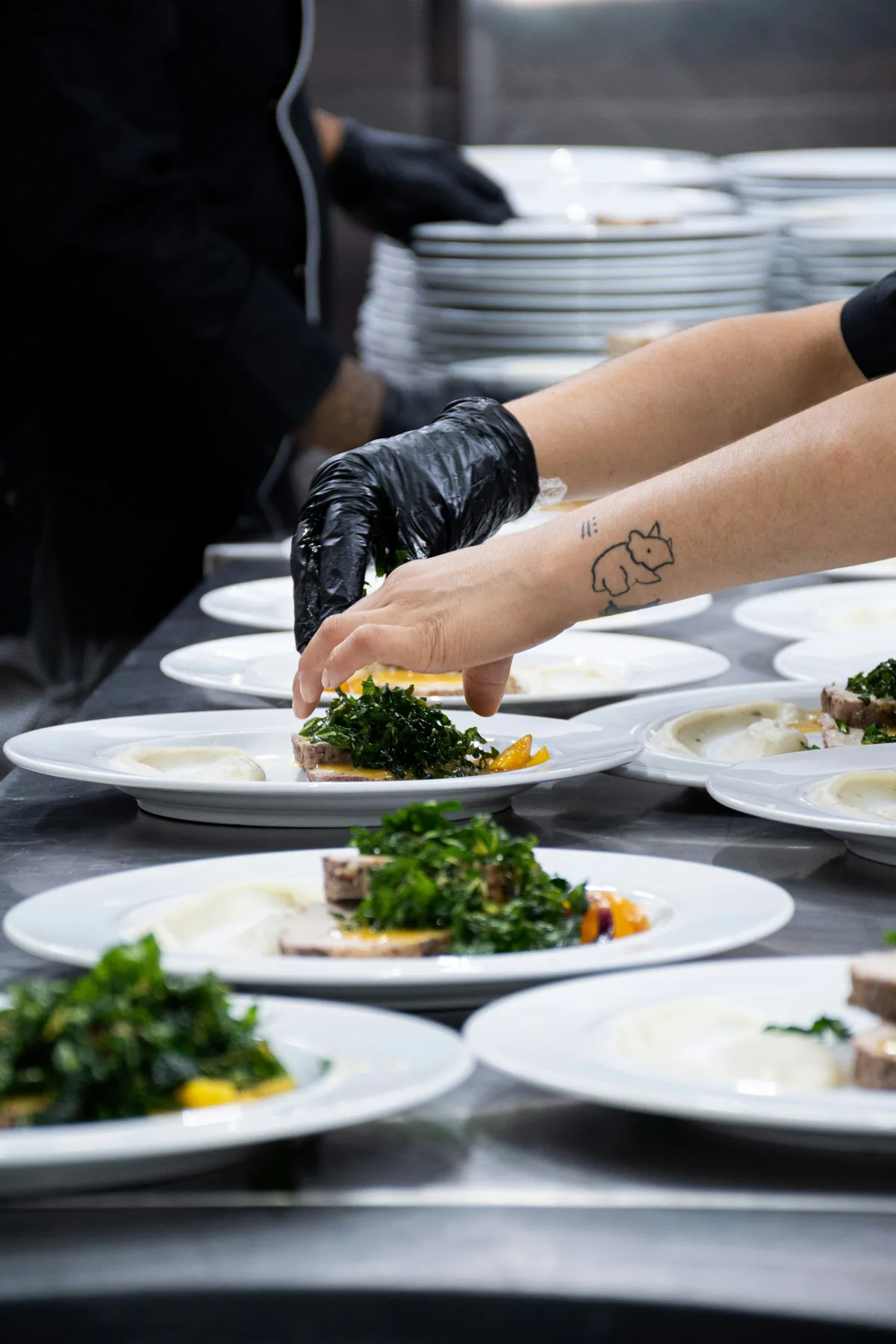
Healthcare food service integration with Electronic Medical Records (EMR) uses HL7 and FHIR standards for secure clinical data exchange. Direct integration automatically retrieves patient dietary orders, allergen restrictions, texture modifications (puree, minced, soft, regular), fluid restrictions, nutritional requirements, and special diets (diabetic, renal, cardiac, low sodium, etc.) from EMR systems like Epic, Cerner, Meditech, and Allscripts. Patient dietary information flows into kitchen production systems without manual cross-referencing or paper printouts. Meal production planning generates optimized kitchen worksheets organized by diet type, maximizing batch cooking efficiency. Tray assembly workstations provide visual guidance for staff building patient meals with automated verification preventing wrong items. Allergen alerts flag dangerous combinations before meals leave kitchen. Patient room service ordering through bedside tablets displays menu options automatically filtered by each patient's specific dietary restrictions. Compliance tracking documents temperature checks, food safety requirements, and meal delivery verification with audit-ready reporting. Integration is read-only for security, pulling dietary data from EMR without ability to modify clinical records. Most healthcare kitchens reduce dietary violations from 5-8 weekly to near-zero while cutting manual dietary cross-referencing from 3-4 hours daily to under 15 minutes.
Ghost kitchen and multi-brand operations require specialized software managing multiple virtual restaurant concepts from single physical locations. Each brand needs separate menus, pricing, delivery platform presence, and customer-facing identity while sharing kitchen resources, inventory, and staff. Traditional restaurant software can't handle this complexity effectively. Custom multi-brand platforms consolidate orders from all brands and delivery platforms into unified kitchen displays with intelligent routing by brand concept, cooking station, and order priority. Shared inventory tracks ingredient usage across brands with accurate cost allocation based on recipe specifications for true brand profitability analysis. Kitchen capacity management monitors real-time utilization across all stations and brands, automatically throttling delivery platform availability when approaching capacity limits. This prevents over-promising and excessive delivery times that kill customer satisfaction. Brand performance analytics show which concepts drive volume versus profitability, informing decisions about which brands to expand, modify, or eliminate. Menu engineering identifies high-margin items by concept. Most ghost kitchen operators can manage 3-5 brands from single location with same staffing that previously handled one concept, driving 40-60% revenue increases per facility through better kitchen utilization and operational efficiency.
Restaurant data security protects customer payment information (PCI DSS compliance), employee data (privacy regulations), operational information, and financial records. Our security approach includes encrypted data transmission (TLS 1.3), encrypted storage at rest (AES-256), PCI DSS compliance for payment processing, role-based access control limiting data visibility, multi-factor authentication for administrative access, automated security patching, and comprehensive audit logging. Cloud infrastructure uses Google Cloud, Azure, or GCP with SOC 2 compliance. Payment processing integration uses tokenization so sensitive card data never touches your servers or ours. Customer data handling complies with privacy regulations (GDPR in Europe, CCPA in California, PIPEDA in Canada, Privacy Act in Australia). Employee time tracking and payroll integration includes appropriate data protection for personal information. For operations concerned about cloud security, we can deploy hybrid solutions keeping sensitive data on-premises while enabling field access to operational features. Regular backups maintain 30-day recovery capability. Unlike many commercial restaurant platforms where vendors own your data and may share with partners, custom platforms ensure you control exactly who accesses your operational and customer information.
Restaurant mobile applications need offline functionality for areas with weak connectivity, minimal data entry through cameras and scanners, and role-specific workflows for different team members. Essential capabilities include mobile time clock with GPS verification eliminating paper timesheets and preventing buddy punching. Managers need access to real-time dashboards showing sales, labor costs, food costs, and operational metrics from anywhere. Kitchen teams need production checklists, prep lists, and recipe instructions accessible on tablets. Delivery drivers need order details, customer addresses, navigation, and delivery confirmation with photo proof. Inventory management through mobile enables receiving verification by scanning barcodes, waste tracking by capturing photos and reasons, and physical count verification. Staff scheduling features show upcoming shifts, allow shift swap requests, and enable availability updates. Push notifications alert staff to schedule changes, important announcements, and critical operational issues. Order management for catering sales teams enables remote quote generation and proposal sending. Our mobile applications use Progressive Web App (PWA) technology working across iOS, Android, and tablets from single codebase, reducing development costs versus separate native apps while providing near-native performance and offline capabilities.
Hospitality software development typically takes 10-16 weeks from project kickoff to initial deployment with phased rollout minimizing operational disruption. Timeline depends on integration complexity (POS systems, delivery platforms, EMR for healthcare), number of locations, customization requirements, and team availability for testing. Discovery and planning phase (2-3 weeks) includes detailed requirements gathering, workflow mapping, POS and system integration assessment, and project scoping. Initial development sprint (5-7 weeks) builds core platform with highest-priority features. Typically multi-channel order management, POS integration, or inventory management delivering immediate operational value. Testing and refinement (2-3 weeks) involves staff validation at pilot location, workflow adjustments based on real-world usage, and integration debugging. Training and deployment (1-2 weeks) happens gradually, starting with pilot location before rolling out to additional sites. Advanced features like catering management, healthcare EMR integration, or multi-brand ghost kitchen capabilities are often deployed in subsequent phases after core platform is stable. This phased approach delivers value quickly while managing operational risk. We're honest upfront about timeline if your project involves unusual complexity. Most operations are using core platform within 12-14 weeks of project start.